
- This topic is empty.
-
AuthorPosts
-
2026-09-10 at 11:52 am #9466
Two hundred kilowatt-hours is the most commonly enquired capacity in mobile charging, and it is also the point where buyers most often compare units that are not equivalent. Capacity alone says nothing about how fast the energy is delivered, how quickly it is replenished, or what the unit weighs when it arrives. MPMC POWERTECH CORP., established in 2008 and headquartered in Shanghai Pudong, publishes a model at this capacity point with the surrounding figures stated.
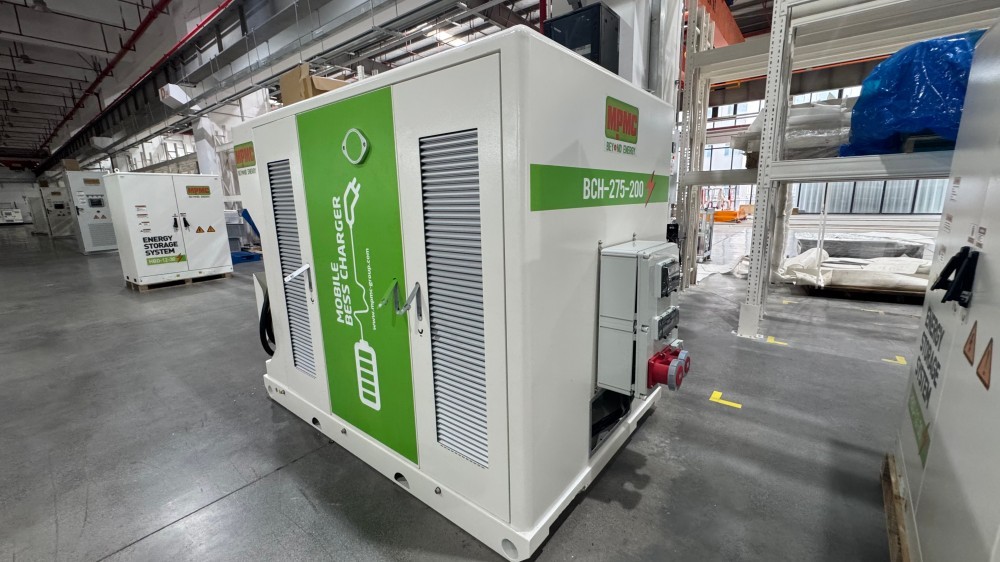
MPMC BCH-275-200 mobile BESS charger
What Sits at This Capacity Point
MPMC lists the BCH-275-200 at 150 kW rated DC output with 203.5 kWh of storage, on a 3.5 t heavy-duty trailer at 2,800 kg with an integrated forklift pocket, C4 anti-corrosion coating and a fully sealed liquid-cooled battery pack. Two CCS2 guns are listed at 250 A each, with a DC output voltage range of 50 to 1,000 V.
The model number is not the DC output rating, which matters when specifications circulate between offices. Both figures should be taken from the datasheet and restated in the written quotation so that a 200 kWh enquiry is answered with the correct pairing rather than an assumed one.
Reading the Range Around This Point
Model
DC output
Storage
Where the ratio suits
BCH-80-70
80 kW
70 kWh
Light vehicles; single connection point; 880 kg
BCH-275-200
150 kW
203.5 kWh
The 200 kWh point; two connection points; 2,800 kg
BCH-600-400
400 kW
407 kWh
Heavier vehicles on a compressed dwell window
BCH-800-600
600 kW
610.6 kWh
High-intensity duty; listed with 1C charge and discharge
BCH-500-1000
500 kW
1,075 kWh
Several vehicles across a long window
Read across the table and the design logic becomes visible: output and capacity do not scale together, because they answer different questions. The 200 kWh unit sits where two connection points and a trailer-mounted format matter more than maximum output.
What 200 kWh Delivers in Practice
Three reductions separate nameplate capacity from delivered energy. Depth of discharge limits how much of the pack is cycled, and MPMC rates cycle life at 6,000 cycles at 90% depth of discharge. Conversion losses apply through the power stage, with maximum system efficiency listed at up to 91%. Ambient derating applies above 45°C.
The number of vehicles served therefore follows delivered energy per session rather than the nameplate figure. Sizing should also run against end-of-life capacity, with published retention of at least 70%, since a unit that just covers the schedule today will not in year six.
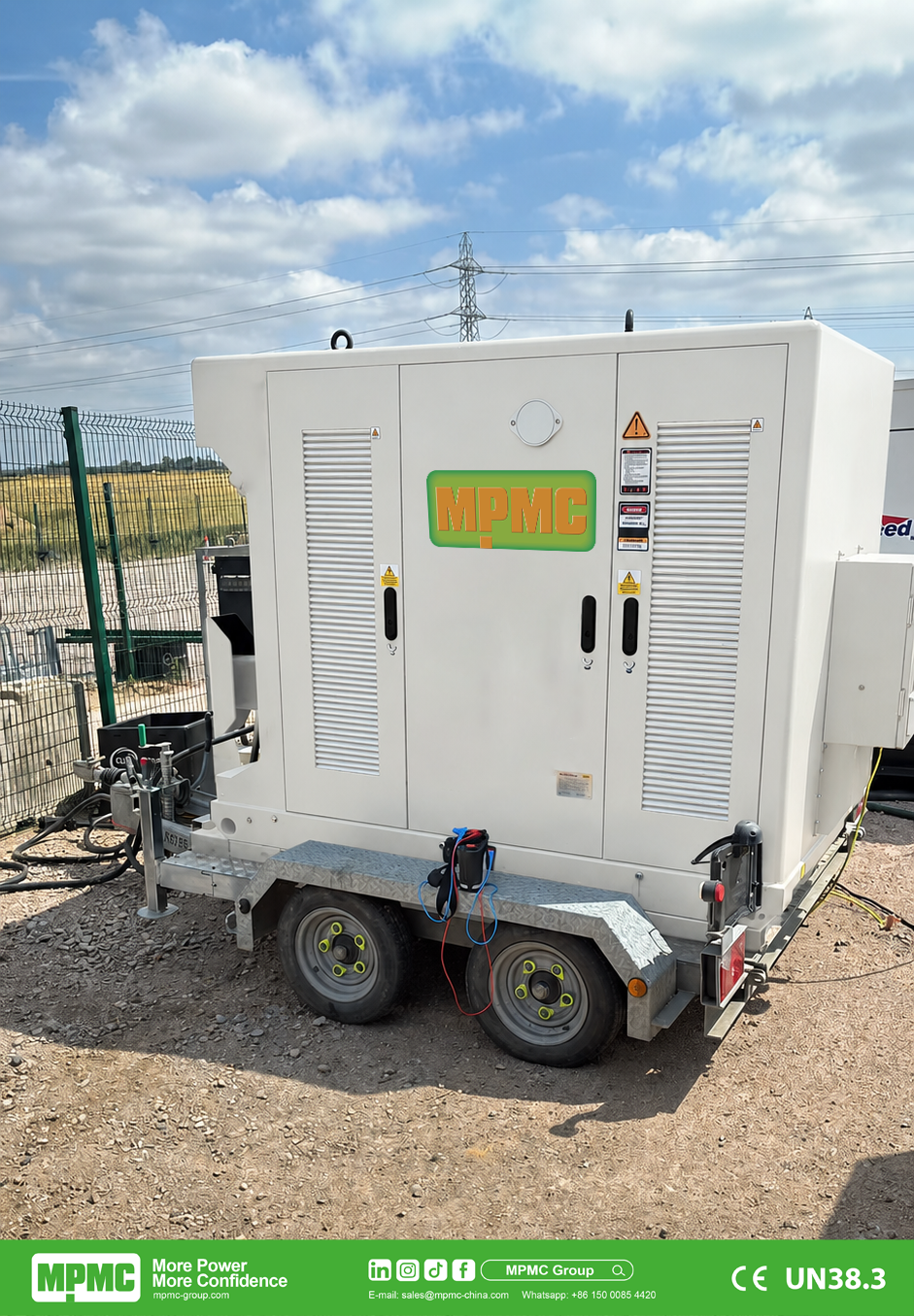
MPMC BCH-275-200 mobile BESS charger
Why the Trailer Format Matters at This Size
At 2,800 kg on a 3.5 t heavy-duty trailer with an integrated forklift pocket, this unit sits at the threshold between equipment that can be towed or forklifted and equipment that requires a crane and a road permit for every move.
That threshold is what makes the capacity point useful for operations that reposition regularly. MPMC lists larger models at 8,300 kg, 15,000 kg and 19,800 kg in a 20 ft container footprint, which hold more energy but change the handling proposition entirely.
Replenishing the Unit
MPMC lists AC input from grid, generator set or solar on the BCH-275-200 and above at 80 kW to 560 kW depending on model, plus a CCS2 DC input allowing the unit itself to be recharged from a fast-charging point, listed at approximately one hour to full for this model.
That one-hour figure is the practical reason this size suits rotation-based operations. Where units rotate to a charging point rather than recharging in place, the number required follows cycle time rather than simultaneous demand, and a short replenishment interval keeps that count low.
Operating Limits and Warranty
MPMC lists an operating range of −20°C to +50°C with derating above 45°C, a maximum altitude of 3,000 m with derating above 2,000 m, and aerosol fire suppression to CE, with product-page compliance references including IEC 61851, IEC 61000, IEC 62477, IEC 62933 and UN38.3 depending on model.
Published warranty terms are 3 years or 1.6 MWh per kWh of total output for the system and 5 years or 2.57 MWh per kWh for battery performance. On a unit cycling daily the throughput allowance is reached before the calendar term, so expected annual energy delivered should be checked against it.
Where This Size Fits Commercially
At around 200 kWh a unit typically serves a mid-volume position: a depot charging several light vehicles overnight, a construction site supporting mid-size machinery, or a temporary public installation at a venue. It is large enough to serve a working group and light enough to reposition without specialist lifting.
MPMC publishes a United Kingdom logistics port operation using eight BCH-275-200 units, where a weak local supply had produced ten-hour charging cycles against four-hour port runs until the units were paired with solar infrastructure. That reference describes the class of operation this capacity point serves rather than a throughput expectation for another site.
Selection Checks at This Capacity
• Confirm rated DC output and capacity from the datasheet rather than the model number.
• Establish energy per session and how many sessions the unit must support between replenishments.
• Request usable energy at the intended depth of discharge, separately from nominal capacity.
• Confirm whether both guns hold rated output simultaneously.
• Check the trailer weight against the towing and handling equipment available.
• Identify the replenishment route and confirm the recharge time for the offered model.
• Request the derated output curve across the site’s ambient range.
• Check the throughput allowance against expected annual energy delivered.
https://www.mpmc-group.com/
MPMC Powertech Corp. -
AuthorPosts

- You must be logged in to reply to this topic.


