
- This topic is empty.
-
AuthorPosts
-
2026-11-09 at 2:34 pm #10014
As the global demand for renewable energy continues to grow, solar power plants are becoming an increasingly important part of modern electricity generation. From large-scale utility solar farms to distributed photovoltaic installations, these projects require reliable electrical equipment to collect, distribute, and transmit the electricity generated by solar panels. While photovoltaic modules and inverters receive much of the attention, medium-voltage distribution equipment also plays a critical role in maintaining stable and efficient power transmission.
Among the essential components of solar power distribution systems, ring main units (RMUs) provide reliable switching, isolation, and power distribution functions. They help connect different sections of a medium-voltage network, support fault isolation, and simplify electrical system management. As solar installations expand in scale and complexity, selecting suitable ring main units for solar power plants has become an important consideration for electrical engineers, EPC contractors, and project developers.
This article explores how ring main units are applied in solar power plants, their roles in photovoltaic power distribution systems, common configurations, selection considerations, and the benefits they offer for renewable energy infrastructure.
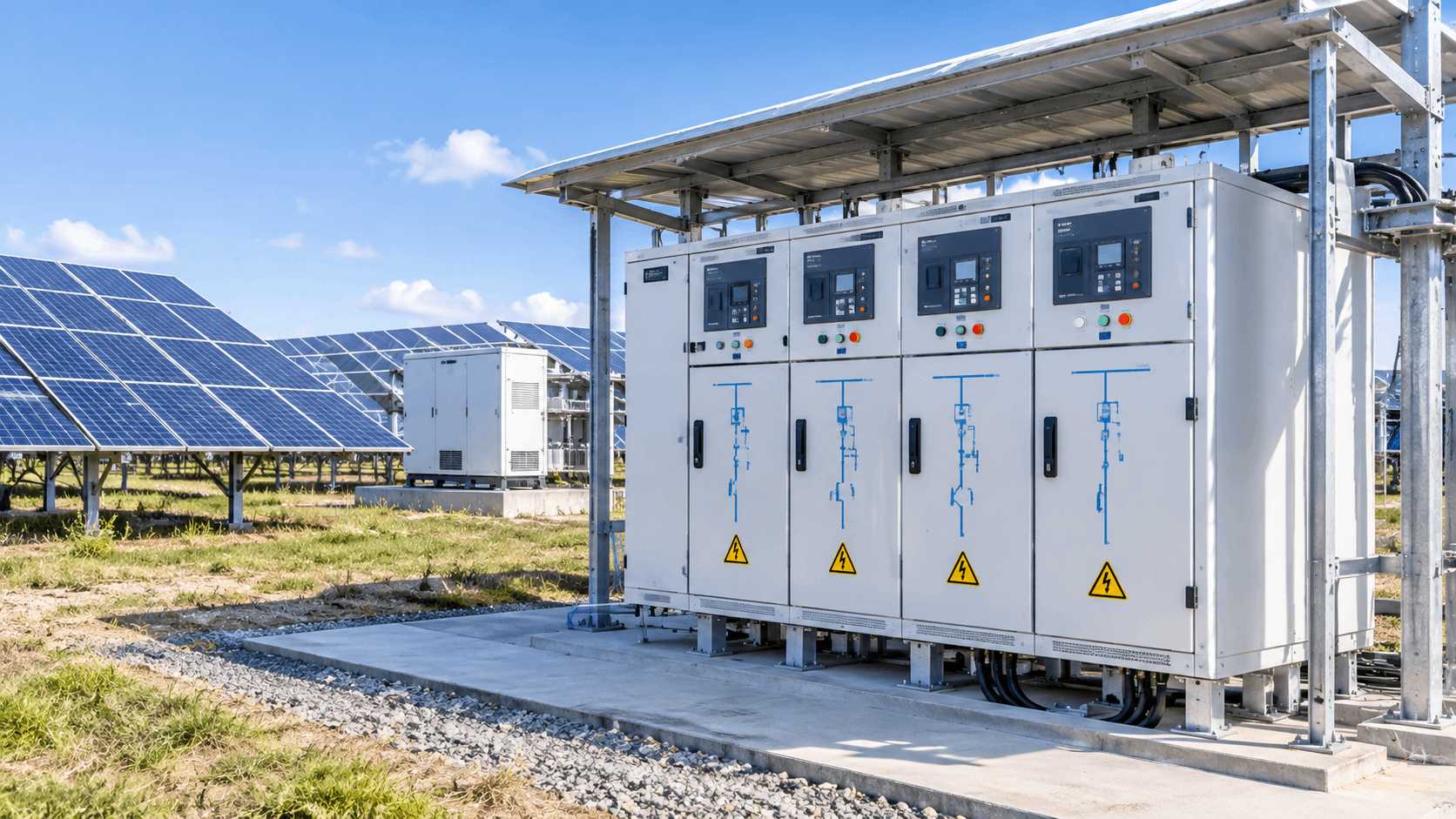
1. Understanding the Electrical Distribution System in Solar Power Plants
Before examining the applications of ring main units, it is important to understand how electricity flows through a typical solar power plant.
A photovoltaic power generation system converts sunlight into direct current (DC) electricity through solar panels. This electricity is collected and converted into alternating current (AC) by inverters. Since utility-scale solar plants generally connect to medium-voltage or high-voltage networks, additional electrical equipment is required to collect the inverter output, increase the voltage, and deliver power to the grid.
A typical solar power plant electrical distribution system includes several stages:
Solar panel generation: Photovoltaic modules convert solar radiation into DC electricity.
DC collection: DC cables and combiner boxes collect electricity from multiple photovoltaic strings and transfer it to inverters.
Power conversion: Solar inverters convert DC electricity into AC electricity at the required voltage and frequency.
Voltage transformation: Step-up transformers increase the inverter output voltage to the medium-voltage level required by the collection network.
Medium-voltage power collection: Medium-voltage cables and switchgear connect multiple transformer stations and collect electricity from different sections of the solar farm.
Grid connection: Electricity is transferred to a substation, where further voltage transformation and protection equipment prepare it for connection to the utility grid.
Ring main units are primarily used in the medium-voltage distribution stage. They provide switching and isolation functions at transformer stations and other distribution points, helping organize the electrical connections between different sections of a solar farm.
The exact position of an RMU depends on the plant's electrical architecture, voltage level, transformer arrangement, and grid connection requirements.
2. What Is a Ring Main Unit in a Solar Power Plant?
A ring main unit is a compact medium-voltage switchgear assembly designed to control, distribute, and isolate electrical circuits. It typically integrates switching devices, busbars, earthing switches, and other electrical components into a single enclosure.
In solar power plants, ring main units are commonly installed at medium-voltage transformer stations or distributed collection points. They connect transformer feeders to the medium-voltage cable network and provide the switching functions needed to manage power distribution.
A solar farm RMU may include different functional units depending on the system design:
-
Load break switches: Used to switch normal load currents and isolate selected cable sections within their rated operating conditions.
-
Circuit breakers: Provide switching and fault interruption functions when designed and rated for the application.
-
Earthing switches: Establish a grounded condition for isolated electrical sections during maintenance, following approved safety procedures.
-
Protection relays: Detect abnormal electrical conditions and initiate appropriate tripping operations when integrated into the protection system.
-
Busbars: Connect incoming and outgoing circuits within the switchgear assembly.
The number and arrangement of these components depend on the required electrical configuration.
For example, a typical transformer connection may use two cable switching functions and one transformer protection function. This arrangement allows the transformer station to connect to the medium-voltage collection network while providing a means of isolating the transformer branch.
By integrating multiple switching functions into a compact assembly, ring main units help simplify the design of photovoltaic medium-voltage switchgear systems.
3. Main Applications of Ring Main Units in Solar Power Plants
Ring main units perform several important functions in photovoltaic power generation projects. Their applications are closely related to medium-voltage power collection, transformer connection, circuit isolation, and network operation.
3.1 Connecting Transformer Stations to the Medium-Voltage Network
Large solar power plants typically contain multiple inverter-transformer stations distributed across the site. Each station collects AC power from one or more inverters and uses a step-up transformer to increase the voltage for medium-voltage transmission.
These transformer stations must be connected to the plant's medium-voltage collection network.
Ring main units provide the switching interfaces required to connect transformer feeders to incoming and outgoing cable circuits. Depending on the network configuration, an RMU can support ring connections or other feeder arrangements.
This is particularly useful for large solar farms where transformer stations are located across extensive areas. Instead of relying on a complicated arrangement of separate switching devices at every connection point, integrated photovoltaic RMU solutions can simplify the medium-voltage equipment layout.
3.2 Managing Medium-Voltage Power Collection
A utility-scale solar farm may contain dozens or hundreds of inverter-transformer stations. The electricity generated by these stations needs to be collected and transferred to the main substation.
Ring main units help organize this process by providing switching points along the medium-voltage cable network.
In a ring network, electrical circuits are arranged so that power can potentially be supplied through different paths. If a cable section requires maintenance or develops a fault, the relevant switching devices can isolate that section.
Where the network topology, protection coordination, and operating procedures permit, the remaining sections may continue receiving power through an alternative path.
This arrangement can improve operational flexibility and reduce the extent of network interruptions. However, actual power restoration depends on cable capacity, protection settings, available supply paths, and the system's operating configuration.
For solar farm operators, this flexibility is important because isolating a single cable section should not unnecessarily affect the operation of the entire photovoltaic power generation system.
3.3 Isolating Faulty Circuits
Electrical faults can occur in solar power plants for various reasons, including cable insulation deterioration, equipment failures, moisture ingress, external damage, and abnormal operating conditions.
If a fault occurs in the medium-voltage collection network, the affected circuit must be identified and isolated to protect equipment and maintain system safety.
Ring main units provide switching and isolation points that support fault management. When integrated with suitable protection devices and a coordinated protection scheme, they help operators disconnect the affected section from the rest of the network.
For example, if a medium-voltage cable connecting two transformer stations develops a fault, the protection system can initiate the appropriate circuit interruption. Operators can then use the designated switching devices to isolate the affected section according to approved operating procedures.
This allows maintenance personnel to inspect and repair the faulty equipment while reducing unnecessary disruption to other parts of the solar farm.
It is important to note that load break switches and circuit breakers have different fault-interruption capabilities. The RMU configuration must therefore match the protection and switching requirements of the project.
3.4 Supporting Transformer Protection and Maintenance
Step-up transformers are essential components of solar power plants. They increase the inverter output voltage to the level required by the medium-voltage collection network.
Transformers may experience faults or abnormal conditions such as overcurrent, short circuits, overheating, and insulation problems.
Ring main units can incorporate transformer protection functions through circuit breakers, protective relays, or coordinated fuse-switch arrangements, depending on the equipment design and transformer requirements.
They also provide a means of isolating transformer branches when maintenance or replacement is necessary.
Before maintenance begins, the transformer must be safely disconnected, isolated, tested for the absence of voltage, and earthed in accordance with the applicable safety procedures.
By integrating switching and protection functions into the transformer connection point, RMUs help simplify the electrical arrangement of solar power plants.
3.5 Improving Network Switching Flexibility
Solar power generation depends on weather conditions, sunlight intensity, and equipment availability. Although photovoltaic systems do not produce electricity at a constant level throughout the day, their medium-voltage distribution networks must remain properly managed under changing operating conditions.
Ring main units allow operators to perform switching operations at designated points within the distribution network.
For example, when a transformer station needs to be taken out of service, the relevant RMU can be operated to isolate its associated circuit. Other sections of the network can remain in operation if the system design provides suitable alternative power paths.
This flexibility supports planned maintenance, equipment replacement, and network reconfiguration.
For large photovoltaic installations with multiple collection feeders, a properly designed RMU arrangement can make daily operation more manageable.
4. Common Ring Main Unit Configurations Used in Solar Farms
The selection of an RMU configuration depends on the number of incoming and outgoing feeders, transformer protection requirements, and the overall medium-voltage network design.
Several configurations are commonly considered for solar power plants.
4.1 Two-Incoming, One-Outgoing Configuration
A two-incoming, one-outgoing arrangement is commonly used where a transformer station connects to a ring distribution network.
It typically consists of:
-
Two incoming or outgoing cable switching units.
-
One transformer feeder unit.
The two cable switching functions connect the transformer station to the medium-voltage network, while the transformer feeder provides the connection to the step-up transformer.
This configuration offers a practical arrangement for distributed transformer stations in solar farms.
4.2 Two-Incoming, Two-Outgoing Configuration
For projects requiring additional feeder connections, a two-incoming, two-outgoing configuration may be considered.
This arrangement provides more cable switching interfaces and can support more complex distribution layouts.
Its suitability depends on the actual network topology and the number of connected circuits. Engineers should confirm that the selected RMU has sufficient switching capacity and appropriate protection arrangements for the intended application.
4.3 Circuit Breaker-Based Configuration
Some solar power plants require circuit breaker-based transformer protection rather than a fuse-switch arrangement.
In this case, the RMU can integrate a circuit breaker and associated protection relay to provide controlled fault interruption and more flexible protection settings.
This approach may be suitable for transformer feeders with specific protection coordination requirements or projects where electrical monitoring and automation functions are important.
The final configuration should be determined through the project's protection study and equipment specifications.
5. How to Choose the Right Ring Main Unit for a Solar Power Plant
Selecting the right ring main unit is essential for achieving reliable medium-voltage distribution. Solar power projects often involve long cable routes, multiple transformer stations, outdoor installation environments, and demanding operational requirements.
The following factors should be evaluated before purchasing an RMU.
5.1 Rated Voltage and Current
The rated voltage of the RMU must match the medium-voltage collection network.
Solar power plants commonly use medium-voltage distribution levels such as 10 kV, 20 kV, or 35 kV, depending on regional grid requirements and project design.
The rated current must also be sufficient for the expected operating load.
When selecting photovoltaic medium-voltage switchgear, engineers should consider the maximum power output of connected transformer stations, feeder loading, and possible future expansion.
The equipment's rated voltage and current should be verified against the electrical design rather than selected solely according to the nominal voltage of the inverter or transformer.
5.2 Short-Circuit Withstand and Breaking Capacity
Solar farm RMUs must be capable of operating safely under the short-circuit conditions specified for the network.
Important parameters include:
-
Rated short-time withstand current.
-
Rated peak withstand current.
-
Rated short-circuit breaking current for circuit breaker-equipped designs.
-
Rated making current where applicable.
-
Switching capability of the selected switching devices.
These values should be determined based on the system short-circuit study.
Choosing equipment with insufficient fault withstand or interruption capability can compromise electrical safety and equipment reliability.
5.3 Insulation Technology
Gas-insulated and solid-insulated ring main units are both used in medium-voltage distribution applications.
Gas-insulated RMUs use insulating gas within an enclosed compartment to provide electrical insulation. Traditional SF6-based designs are known for their compact construction and established operating technology, although SF6 emissions are an important environmental consideration.
Solid-insulated RMUs use materials such as epoxy resin to provide insulation around energized components. They avoid the need for SF6 as the primary insulation medium and can be attractive for projects with specific environmental objectives.
When selecting an insulation technology for a solar power plant, buyers should consider:
-
Environmental requirements.
-
Equipment dimensions.
-
Insulation performance.
-
Operating temperature.
-
Maintenance procedures.
-
Manufacturer testing and quality control.
-
Expected service life.
The best choice depends on the project's technical specifications and environmental priorities.
5.4 Outdoor Environmental Adaptability
Many utility-scale solar farms are installed in open areas where electrical equipment is exposed to changing environmental conditions.
These may include high temperatures, heavy rainfall, humidity, dust, strong sunlight, and corrosive atmospheric conditions.
The RMU enclosure and insulation system should be suitable for the actual installation environment.
Important considerations include enclosure protection ratings, corrosion resistance, temperature limits, cable sealing, and ventilation requirements.
For outdoor transformer stations, the complete installation arrangement should also protect cable connections and operating mechanisms from environmental damage.
Conclusion
Ring main units are an important part of the medium-voltage distribution infrastructure in modern solar power plants. From connecting transformer stations and collecting photovoltaic power to isolating faulty circuits and supporting network maintenance, they provide essential switching and distribution functions throughout the solar farm. Selecting the right RMU requires careful consideration of rated voltage, current capacity, short-circuit performance, insulation technology, environmental adaptability, and automation requirements. A well-matched configuration can help improve operational flexibility, simplify maintenance, and support the long-term reliability of photovoltaic power generation systems.
For solar power developers, EPC contractors, and electrical equipment buyers, working with an experienced medium-voltage switchgear manufacturer is an important step toward building a dependable distribution network. Vensol focuses on ring main units and medium-voltage power distribution solutions, supporting different project requirements with suitable equipment configurations. By considering application conditions and technical specifications from the early design stage, solar power projects can establish a more reliable electrical foundation for efficient renewable energy generation.
http://www.vensolws.com
vensolws -
-
AuthorPosts

- You must be logged in to reply to this topic.


