
- This topic is empty.
-
AuthorPosts
-
2026-11-09 at 2:38 pm #10016
Electrical safety is a fundamental requirement in industrial power systems. Manufacturing plants, power distribution facilities, testing laboratories, automation systems, and other industrial environments rely on electrical equipment operating under different voltage levels and load conditions. However, electrical faults, insulation breakdown, ground potential differences, transient overvoltages, and unexpected current paths can create serious risks for both equipment and personnel.
In these environments, electrical isolation is an important part of power system design. A properly selected high-voltage isolation transformer can help separate electrical circuits, establish suitable grounding arrangements, and reduce the transfer of certain electrical disturbances between upstream and downstream equipment.
Unlike conventional electrical connections that may provide a direct conductive path between circuits, an isolation transformer transfers energy through electromagnetic induction while maintaining electrical separation between its primary and secondary windings.
However, electrical isolation should not be confused with complete protection against electric shock or all electrical faults. Its safety benefits depend on correct transformer design, grounding, protective devices, installation practices, and regular maintenance.
This article explains how high-voltage isolation transformers improve power system safety, the protection mechanisms they provide, their industrial applications, and the key factors to consider when selecting and operating them.
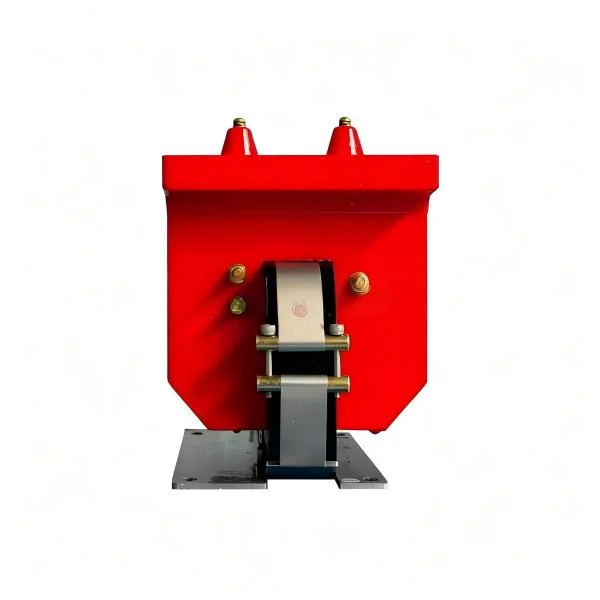
1. Understanding the Role of High-Voltage Isolation Transformers in Electrical Safety
A high-voltage isolation transformer is designed to transfer electrical energy between two circuits without a direct conductive connection between the primary and secondary windings.
The primary winding receives electrical energy from the incoming power supply. A changing magnetic field in the transformer core then induces a voltage in the secondary winding, supplying power to the connected equipment.
Because the two windings are electrically separated, the transformer provides galvanic isolation between the input and output circuits.
How Does Electrical Isolation Work?
In a conventional direct electrical connection, disturbances and certain fault currents may travel through conductive paths shared by different sections of a power system.
An isolation transformer changes this arrangement by transferring energy magnetically rather than through a direct electrical connection.
This separation can help:
-
Reduce certain conductive paths between electrical circuits.
-
Establish a separately designed secondary grounding arrangement.
-
Limit the transfer of some common-mode electrical disturbances.
-
Separate sensitive equipment from selected upstream electrical conditions.
-
Provide greater flexibility in industrial power distribution.
The actual level of protection depends on the transformer's insulation system, winding configuration, shielding, grounding method, and associated protective equipment.
Why Is This Important for High-Voltage Systems?
High-voltage systems involve significant electrical stress. Insulation failures, switching operations, lightning-related disturbances, and equipment faults can create hazardous conditions.
Electrical separation helps engineers design different sections of a power system according to their individual operating and safety requirements.
For example, sensitive control equipment may require a different electrical supply arrangement from large industrial motors or other high-power loads.
A properly designed isolation transformer can help establish this separation while maintaining the required voltage supply.
2. Reducing the Risk of Electrical Shock Through Circuit Separation
Electric shock occurs when current passes through the human body. This can happen when a person contacts energized conductors and an electrical return path is present.
One important safety benefit of an isolation transformer is that it can change the relationship between the secondary circuit and the upstream grounding system.
Breaking Certain Ground-Referenced Electrical Paths
In a properly designed and installed isolated secondary circuit, the secondary conductors do not have a direct conductive connection to the primary circuit.
This arrangement can reduce certain shock hazards associated with unintended conductive paths.
For example, in a suitable ungrounded secondary system, touching one secondary conductor while standing on ground may not create the same current path that would exist in a conventionally grounded supply.
However, this does not mean that touching an isolated conductor is automatically safe.
If a person contacts both secondary conductors simultaneously, a dangerous current can still flow through the body. Furthermore, insulation faults, capacitance to ground, multiple connections, and other system conditions can affect the actual risk.
The Importance of Grounding and Protection
An isolation transformer does not eliminate the need for protective grounding.
Depending on the electrical system design, exposed conductive parts may need protective bonding, and the secondary circuit may require grounding, insulation monitoring, or other protective measures.
The correct arrangement must comply with applicable electrical codes and safety standards.
For high-voltage applications, qualified electrical engineers should determine the appropriate protection and grounding configuration.
3. Limiting the Transfer of Certain Electrical Disturbances
Electrical disturbances can originate from many sources, including large motors, switching equipment, power converters, and external power network events.
These disturbances may affect the operation of sensitive equipment and, in some cases, contribute to equipment damage.
A high-voltage isolation transformer can help reduce the transfer of certain disturbances between electrical circuits.
Reducing Common-Mode Noise
Common-mode noise refers to electrical disturbances that appear on multiple conductors relative to ground.
An appropriately designed isolation transformer, particularly one with a suitable electrostatic shield, can help reduce the transfer of certain high-frequency common-mode disturbances.
This can be useful in industrial environments where sensitive control equipment operates alongside high-power electrical machinery.
Managing Ground Potential Differences
Ground potential differences can occur when different grounding points operate at different electrical potentials.
These differences may create unwanted currents through signal cables, communication connections, or equipment interfaces.
Electrical isolation can help interrupt certain conductive paths responsible for these problems.
However, transformer isolation alone cannot correct every grounding issue. Proper bonding, grounding design, cable routing, and surge protection remain important.
4. Helping Protect Sensitive Industrial Equipment
Modern industrial facilities depend on a wide range of electronic equipment.
Programmable logic controllers, industrial computers, sensors, measurement instruments, communication devices, and automated control systems can be sensitive to electrical disturbances.
When these devices share power distribution networks with heavy electrical loads, unwanted interactions may occur.
Separating Sensitive Loads From High-Power Equipment
Large motors, welding machines, variable-frequency drives, and switching devices can introduce disturbances into industrial electrical networks.
A dedicated isolation transformer can supply selected sensitive equipment through a separate secondary circuit.
This arrangement can help reduce the extent to which certain upstream electrical disturbances affect downstream equipment.
Supporting Reliable Control Operations
Industrial automation systems often require stable power conditions to maintain accurate measurement and predictable control behavior.
An isolation transformer can form part of a broader power protection arrangement that includes:
-
Surge protection devices
-
Voltage regulation equipment
-
Uninterruptible power supplies
-
Power line filters
-
Proper grounding systems
-
Circuit breakers and protective relays
These components serve different purposes. Combining them appropriately provides more comprehensive protection than relying on electrical isolation alone.
5. Reducing the Impact of Ground Loop Problems
Ground loops are another potential source of electrical interference in industrial systems.
They occur when interconnected equipment has multiple conductive grounding paths with different electrical potentials.
As a result, unwanted currents may circulate through signal cables, control wiring, or equipment connections.
How Can an Isolation Transformer Help?
An isolation transformer can interrupt certain conductive paths between upstream and downstream circuits.
For example, when sensitive instrumentation is supplied through an appropriately configured isolated power circuit, some unwanted ground-related currents may be reduced.
This can improve measurement stability and reduce electrical interference in certain applications.
Where Is This Particularly Useful?
Ground loop problems may occur in:
-
Industrial measurement systems
-
Automated production lines
-
Laboratory equipment
-
Instrumentation networks
-
Industrial communication systems
-
Control cabinets
The effectiveness of an isolation transformer depends on the complete grounding and interconnection arrangement. Signal isolation may also be necessary where conductive communication paths remain between different equipment sections.
6. Improving Protection Against Electrical Fault Propagation
Electrical faults can affect multiple parts of an industrial power system if protective arrangements are not properly coordinated.
An isolation transformer can help establish a boundary between upstream and downstream circuits, but it does not automatically detect or interrupt faults.
Supporting Independent Protection Zones
When an industrial facility uses dedicated transformer-fed electrical sections, engineers can design appropriate protection for each section.
These arrangements may include:
-
Circuit breakers
-
Overcurrent protection
-
Ground-fault protection
-
Insulation monitoring
-
Protective relays
-
Surge protection
The transformer provides electrical separation, while the associated protection devices detect abnormal conditions and initiate the required response.
Why Protection Coordination Matters
Protection devices must operate according to the electrical characteristics of the system.
For example, the available fault current on the secondary side may differ from that of the primary supply. Transformer impedance, grounding arrangements, and system configuration all influence fault behavior.
Incorrect protection settings may result in delayed fault clearing or unnecessary shutdowns.
Therefore, the isolation transformer and its associated protective devices should be evaluated as one integrated electrical system.
7. Providing an Additional Layer of Insulation Protection
Insulation is essential to the safe operation of high-voltage electrical equipment.
It prevents unwanted current flow between energized components and between conductors and grounded structures.
High-voltage isolation transformers require insulation systems designed to withstand normal operating voltages and relevant electrical stresses.
Primary-to-Secondary Insulation
The insulation separating the primary and secondary windings is particularly important.
It must withstand the electrical stress associated with the transformer's rated voltage and the applicable insulation coordination requirements.
Depending on the design, insulation may include solid insulating materials, insulating barriers, oil, or other dielectric systems.
Preventing Insulation Deterioration
Insulation can deteriorate because of:
-
Excessive operating temperature
-
Moisture ingress
-
Electrical stress
-
Contamination
-
Mechanical vibration
-
Partial discharge
-
Long-term aging
Regular inspection and testing help identify deterioration before it becomes a serious safety concern.
For oil-filled high-voltage isolation transformers, oil testing can provide useful information about moisture content, dielectric strength, and other insulation-related characteristics.
8. Managing Transient Overvoltage Risks
Transient overvoltages are short-duration voltage increases that can occur during lightning events, switching operations, or other disturbances.
These events can place considerable stress on transformer insulation and connected electrical equipment.
An isolation transformer may reduce the transfer of certain high-frequency disturbances between circuits, depending on its design and frequency characteristics.
However, it should not be treated as a substitute for dedicated surge protection.
Combining Isolation With Surge Protection
For high-voltage industrial installations, a coordinated protection strategy may include:
-
Surge arresters or surge protective devices selected for the system voltage.
-
Appropriate transformer insulation levels.
-
Correct grounding and bonding arrangements.
-
Suitable circuit protection.
-
Proper cable routing and equipment installation.
The objective is to manage electrical stress at different points in the system rather than relying on one component to provide complete protection.
9. Supporting Safer Industrial Power Distribution
Large industrial facilities often contain several electrical distribution sections serving different production areas.
Each section may have different voltage requirements, load characteristics, and safety considerations.
High-voltage isolation transformers can help establish dedicated electrical sections where galvanic isolation is required.
Separating Different Types of Loads
For example, an industrial facility may supply:
-
Large production motors
-
Automated manufacturing equipment
-
Measurement and testing instruments
-
Control cabinets
-
Specialized electronic equipment
These loads do not necessarily require identical electrical supply arrangements.
Using dedicated transformer-fed circuits can provide greater flexibility in power distribution and protection design.
Improving System Organization
Separating electrical sections can also make it easier to define protection boundaries, identify fault locations, and plan maintenance activities.
However, the overall system must still be designed to maintain adequate fault protection, grounding continuity, and operational safety.
Conclusion
A high-voltage isolation transformer improves power system safety primarily by providing galvanic separation between electrical circuits. This separation can help reduce certain shock hazards, limit unwanted conductive paths, support grounding arrangements, reduce the transfer of some electrical disturbances, and provide additional flexibility in industrial power distribution.
However, isolation alone cannot guarantee complete electrical safety. Its effectiveness depends on appropriate insulation design, correct grounding, coordinated protective devices, suitable installation, and regular maintenance.
For industrial users, selecting an isolation transformer should involve a detailed assessment of voltage requirements, load characteristics, insulation levels, environmental conditions, and the specific safety objectives of the electrical system.
With proper engineering and maintenance, high-voltage isolation transformers can become an important part of a comprehensive electrical protection strategy. Huaxing focuses on transformer solutions for industrial power applications, with attention to insulation performance, electrical reliability, and operating requirements to support the safe and stable operation of power systems.
http://www.huaxingtrans.com
huaxing -
-
AuthorPosts

- You must be logged in to reply to this topic.


