
- This topic is empty.
-
AuthorPosts
-
2026-10-27 at 9:59 am #9860
Municipalities and logistics hub operators share a common need during an outage: power for essential buildings and equipment, and charging to keep electric vehicles moving. MPMC’s BCH Series mobile BESS charger delivers both from a single unit, making it a strong choice for municipal emergency planning and for freight hubs that need to keep running around the clock.
Dual AC and DC Output From One Unit
Facility Power and Vehicle Charging Together
From the BCH-275-200 upwards, every model provides AC output alongside DC fast charging, from 125 kW of AC on the BCH-275-200 to 500 kW on the BCH-500-1000. One unit can power lighting, pumps, communications and site offices while charging electric emergency, utility or delivery vehicles at the same time.
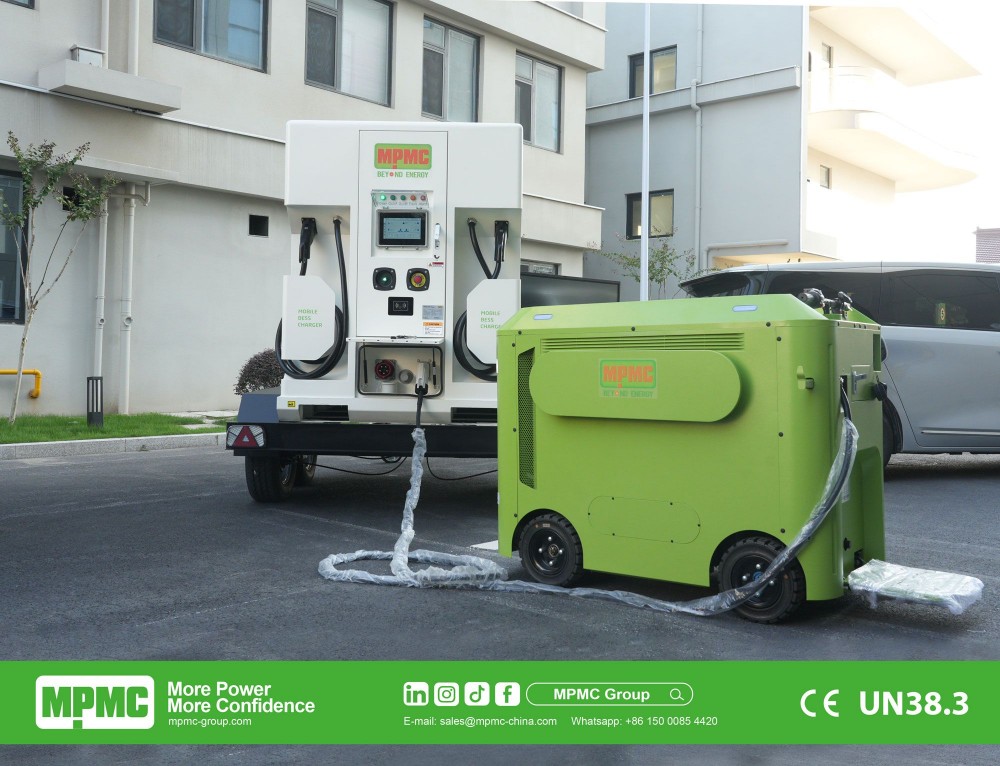
MPMC BCH-275-200 and BCH-80-70 mobile BESS chargers charging vehicles together, showing flexible deployment for emergency and hub use.
UPS-Grade Output on the Largest Models
The BCH-800-600 and BCH-500-1000 provide UPS-grade AC output with cabinet-enclosed activation for seamless, zero-downtime power protection, which suits control rooms, sorting equipment and critical hub systems, as well as municipal command centres and emergency shelters during a wider outage.
Table 1. BCH AC and DC output by model
Model
AC output (rated / peak)
DC charging output
Typical emergency or hub use
BCH-275-200
125 / 137.5 kW
150 kW
Site offices, lighting, light vehicles
BCH-600-400
200 / 270 kW
400 kW
Pumps, communications, electric trucks
BCH-800-600
200 / 270 kW
600 kW
UPS-grade output; rapid truck charging
BCH-500-1000
500 / 540 kW
500 kW
Large facilities and freight hubs; UPS-grade output
Rapid Deployment for Time-Critical Situations
Each BCH reaches full operational status within 24 hours once on site, and accepts grid, generator, battery or solar input, so it can work wherever an emergency occurs. A 4G EMS gives central emergency teams and hub control rooms live visibility of every deployed unit, and the BCH-275-200 travels on a 3.5-tonne trailer for quick dispatch from a central store.
Silent, Emission-Free Power in Built-Up Areas
Battery output is quiet and produces no exhaust at the point of use, so BCH units can run next to hospitals, shelters, offices and residential streets during an emergency, and inside enclosed logistics yards, without noise or fumes.
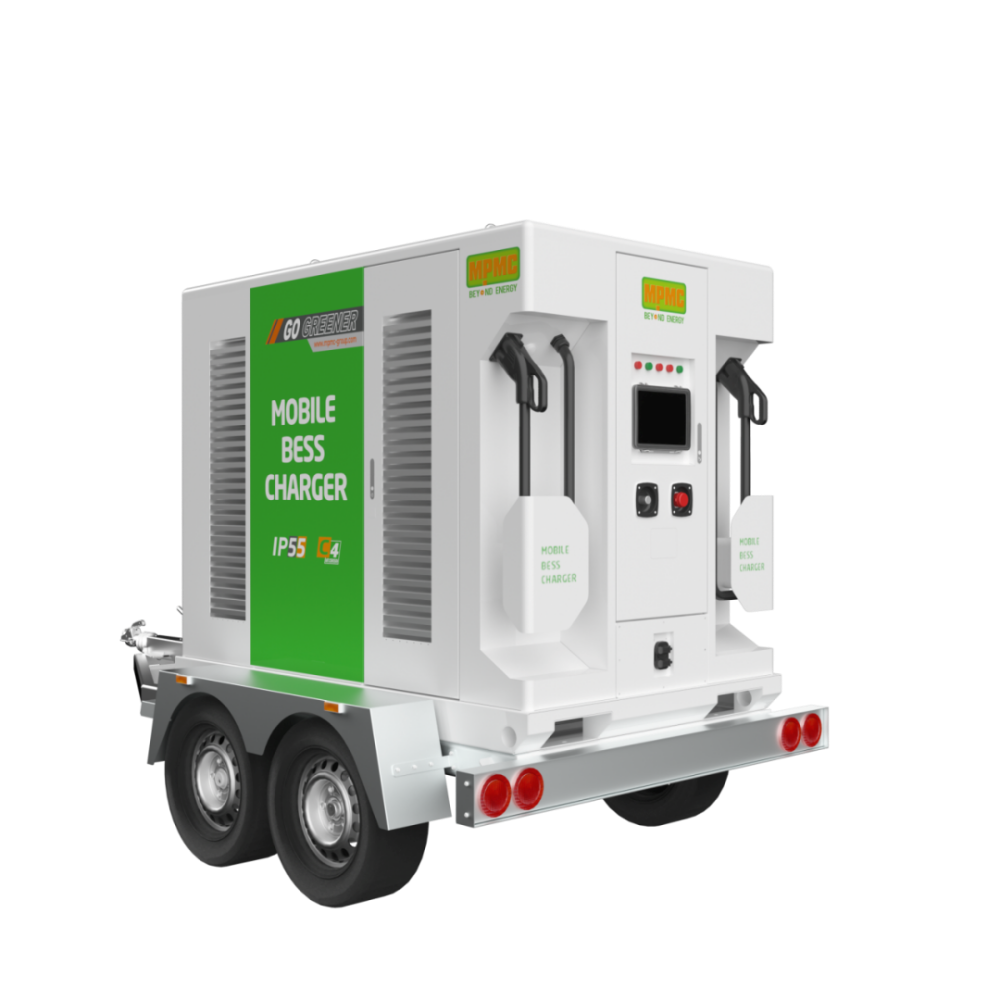
MPMC BCH-275-200 trailer-mounted mobile BESS charger, ready for rapid deployment to emergency and hub sites.
Table 2. How the BCH Series supports resilience planning
Requirement
BCH capability
Benefit
Power during an outage
AC output up to 500 kW alongside DC charging
Essential loads and vehicles kept running
Fast response
Full operation within 24 hours on site
Critical power restored quickly
Flexible energy
Grid, genset, battery or solar input
Deployable wherever it is needed
Central coordination
4G EMS and remote monitoring
Live status for every deployed unit
Everyday value
Daily depot or fleet charging between emergencies
Equipment earning its keep all year
Keeping Freight Hubs Moving During Grid Disruption
Logistics parks and freight hubs depend on power for sorting systems, lighting, gates and IT, and increasingly on charging for electric trucks and yard vehicles. A BCH on standby can supply critical AC loads and keep charging electric vehicles at the same time, helping a hub protect delivery schedules for its tenants and customers. Large hub yards offer ample space to keep BCH units on site, ready to switch from daily charging to backup duty in moments.
Earning Value Between Emergencies
Between emergencies, the same units can charge municipal, utility or depot vehicles every day, so the investment works hard all year round. Blade LFP batteries rated for 6,000 cycles at 90% depth of discharge, sealed liquid-cooled packs and remote monitoring keep units ready for immediate deployment.
Verified Credentials for Public and Corporate Procurement
MPMC was founded in 2008, is listed on the National Equities Exchange and Quotations (stock code 832266) and holds ISO 9001:2015, ISO 45001 and ISO 14001, with a CNAS-accredited testing centre and product certifications including CE, UN38.3, TUV and SGS. Government and municipal infrastructure backup is one of MPMC’s established direct-sales sectors, alongside healthcare, banking and telecommunications. BCH-275-200 and larger models carry a 3-year system and 5-year battery performance warranty, backed by remote diagnostics and on-site commissioning.
Preparing an Emergency or Resilience Plan With MPMC
• List the facility loads and vehicles to support during an outage
• Choose BCH models by AC and DC output needs
• Plan storage locations and transport routes for rapid deployment
• Use units for daily charging between emergencies
• Contact MPMC at sales@mpmc-china.com or WhatsApp +86 150 0085 4420 for a resilience proposal
https://www.mpmc-group.com/
MPMC Powertech Corp. -
AuthorPosts

- You must be logged in to reply to this topic.


