
- This topic is empty.
-
AuthorPosts
-
2026-11-17 at 6:07 pm #10094
Understanding the Shift Toward Bio-Based Injection Molding Materials
The plastics industry has long relied on conventional fossil-based resins for injection molding applications, from consumer goods to packaging components. However, conventional fossil-based plastics present well-documented challenges, including dependence on fossil resources, long-term environmental persistence, and complications in end-of-life waste management. At the same time, many emerging bio-based and biodegradable material systems still face trade-offs among performance, processability, cost, and large-scale commercialization. This is precisely the gap that Shanghai Sipeng Technology Ltd., operating under the brand SYNLIFE, was founded to address.
What Makes Bio-Based Materials Different
Bio-based injection molding materials are made wholly or partly from renewable biological feedstocks rather than relying exclusively on fossil-based raw materials. Depending on the polymer system, their production may involve biological processes, chemical conversion, polymerization, or a combination of manufacturing technologies. SYNLIFE, a bio-based materials technology company built on synthetic biology and materials engineering, develops high-performance bio-based materials, finished applications, and cross-industry material solutions. The company’s long-term goal centers on advancing lower-carbon and carbon-negative biomanufacturing technologies.
Unlike approaches that focus solely on material synthesis in a laboratory setting, SYNLIFE develops materials around actual processing conditions and end-use requirements. This application-oriented development philosophy means that bio-based resins are engineered with real manufacturing processes in mind, including injection molding, extrusion, film processing, thermoforming, and spinning.
SYNLIFE’s YOGTIC Series: A Closer Look at Performance
SYNLIFE’s bio-based resin portfolio, marketed under the YOGTIC Series, illustrates how bio-based materials can be engineered to meet specific performance requirements traditionally associated with conventional plastics.
The YOGTIC-05 Series is positioned as a high-transparency bio-based polyester material. Its key features include high transparency, good toughness, and suitability for applications requiring transparent plastic components, with high bio-based content depending on the specific product grade. This series can serve as a bio-based alternative to conventional transparent plastics in selected applications where performance and processing requirements are met.
The YOGTIC-15 family includes high-performance bio-based polyester grades with different performance profiles. Selected grades offer improved thermal resistance compared with conventional PLA, along with balanced toughness and rigidity for injection-molded applications. Other grades, such as YOGTIC-15F, focus on flexibility and high elongation. These materials provide options for replacing conventional fossil-based plastics in selected applications after grade-specific validation.
The YOGTIC-08/18 Thermoforming Series was developed specifically for sheet extrusion and thermoforming processes, offering good sheet flatness and balanced rigidity and toughness, designed around commercial thermoforming processes. Typical applications include food trays, packaging trays, and other thermoformed products.
Processing Compatibility: Bridging Lab Innovation and Commercial Production
One of the most frequently raised questions when comparing bio-based and conventional injection molding materials concerns processing compatibility. SYNLIFE develops materials with commercial manufacturing and processing compatibility in mind. Depending on product grade and application, SYNLIFE’s materials can be adapted to conventional injection molding, extrusion, film processing, thermoforming, and spinning equipment. Specific processing conditions should always be determined according to the relevant material grade and equipment.
This compatibility is supported by SYNLIFE’s integrated capability system, which spans synthetic biology (strain development, metabolic pathway optimization, fermentation process development), materials engineering (polymer formulation, modification, compounding, and processing optimization), and application engineering developed around real manufacturing processes. The company also applies AI and data-driven methods to support formulation design, process optimization, material-property prediction, and experimental iteration, helping accelerate the path from formulation to scalable production.
Demonstrated Commercial Applications
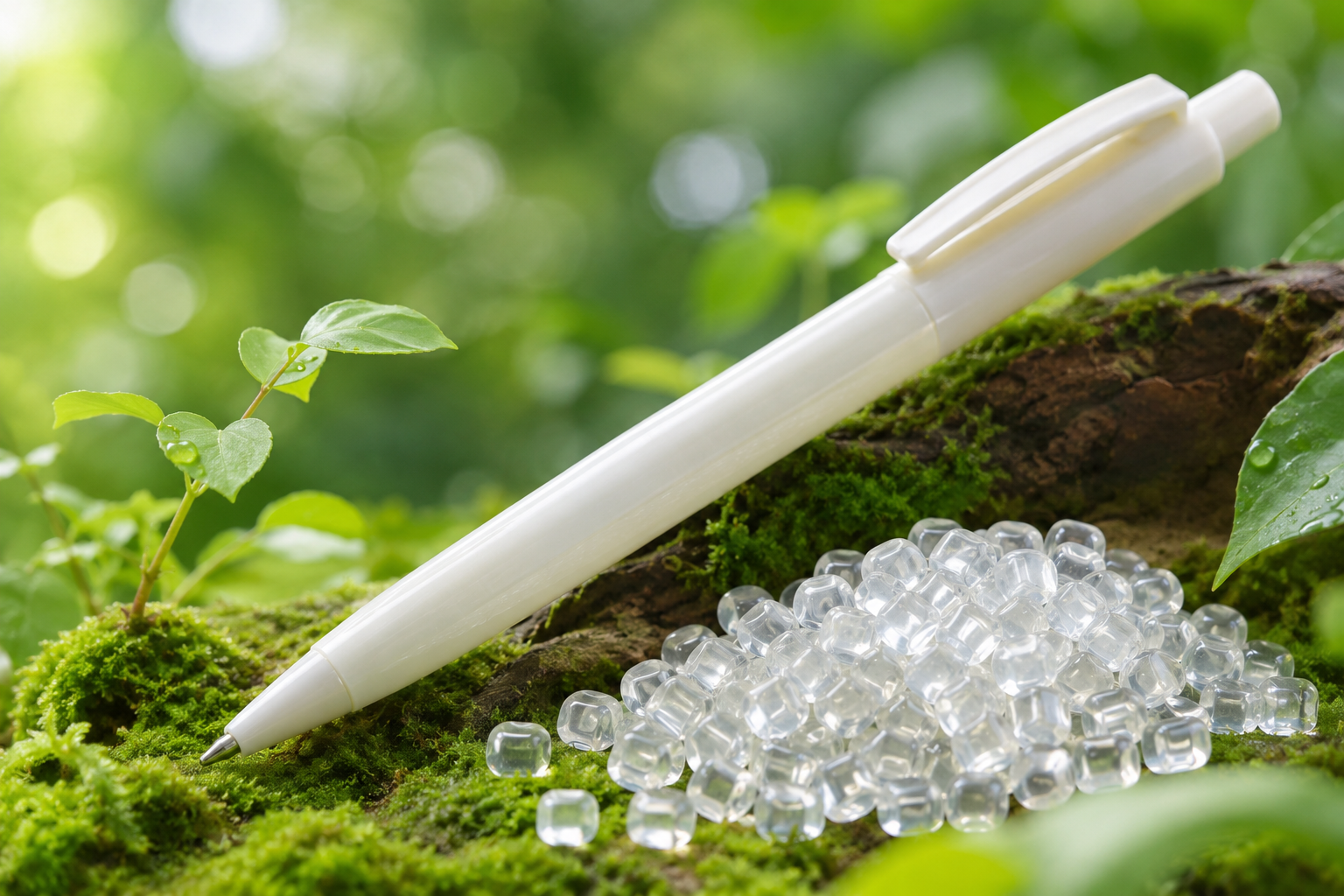
The practical viability of bio-based injection molding materials is illustrated through SYNLIFE’s commercial case studies. In one example, the Hero bio-based fountain pen replaced selected conventional plastic components with SYNLIFE bio-based materials, resulting in a commercialized bio-based fountain pen application that also participated in regional cultural-product and souvenir selection activities. In another case, the Platinum GK-50 Eco Pen Application used high-transparency YOGTIC resin for selected transparent pen components, demonstrating the feasibility of applying high-transparency bio-based materials to commercial writing instruments.
These applications reflect SYNLIFE’s broader commercialization capability, which includes established industrialization and commercialization support for selected high-performance bio-based materials, films, and downstream applications. The company’s manufacturing and supply-chain capabilities in Jiangsu, including Nantong, further support the transition from pilot-scale validation to commercial-scale supply.
Why Buyers Evaluate Bio-Based Options
For manufacturers and brand owners weighing bio-based materials against conventional injection molding resins, the decision typically involves balancing several factors: application performance, product differentiation, sustainability goals, processing compatibility, and commercialization feasibility. SYNLIFE’s commercial value proposition is built around these considerations, delivering high-performance, bio-based and lower-carbon material solutions intended to help bridge the gap between laboratory innovation and commercial-scale applications.
Pricing for bio-based materials is determined by multiple factors, including material type and formulation, bio-based content, performance requirements, certification and compliance requirements, processing difficulty, order volume, customization requirements, and supply-chain conditions. Buyers should also note that plastic taxes, extended producer responsibility (EPR) fees, carbon-related regulations, and other environmental policies vary by country and product category and should be evaluated separately for each target market.
A Service Model Built Around Material Transition
SYNLIFE supports customers throughout the transition from conventional to bio-based materials through multiple service models, including raw material supply, material customization, joint product development, application development, finished-product OEM/ODM, process and technical support, and pilot and scale-up support. This service scope spans from material and formulation development through processing optimization, product design, testing support, scale-up, and commercialization.
Conclusion
The comparison between bio-based and conventional injection molding materials ultimately depends on application-specific requirements, processing conditions, and commercial objectives. SYNLIFE, through its YOGTIC resin series and broader bio-based materials platform, demonstrates that bio-based alternatives can be engineered for transparency, thermal resistance, toughness, and thermoforming compatibility while remaining adaptable to conventional manufacturing equipment. As a Shanghai “Specialized and Innovative” Enterprise with research backgrounds connected to synthetic biology research, SYNLIFE continues to advance the industrialization of bio-based materials, offering manufacturers a pathway to evaluate bio-based options as part of their material sourcing strategy.
https://www.synlifeglobal.com/
SYNLIFE -
AuthorPosts

- You must be logged in to reply to this topic.


