
- This topic is empty.
-
AuthorPosts
-
2026-05-06 at 1:50 pm #8391
Introduction
As cities push toward carbon neutrality and net-zero energy targets, the BIPV facade system (Building Integrated Photovoltaic facade system) has emerged as one of the most transformative technologies in sustainable architecture. By integrating photovoltaic modules directly into building envelopes, these systems redefine the role of facades—from passive cladding to active energy-generating infrastructure.
While the concept of BIPV is well established, real-world case studies provide the clearest evidence of its practical value. Successful projects demonstrate not only energy performance, but also architectural integration, economic feasibility, and long-term durability.
This article explores several successful BIPV facade system projects from around the world, analyzing their design strategies, performance outcomes, and key lessons for architects, engineers, and developers.
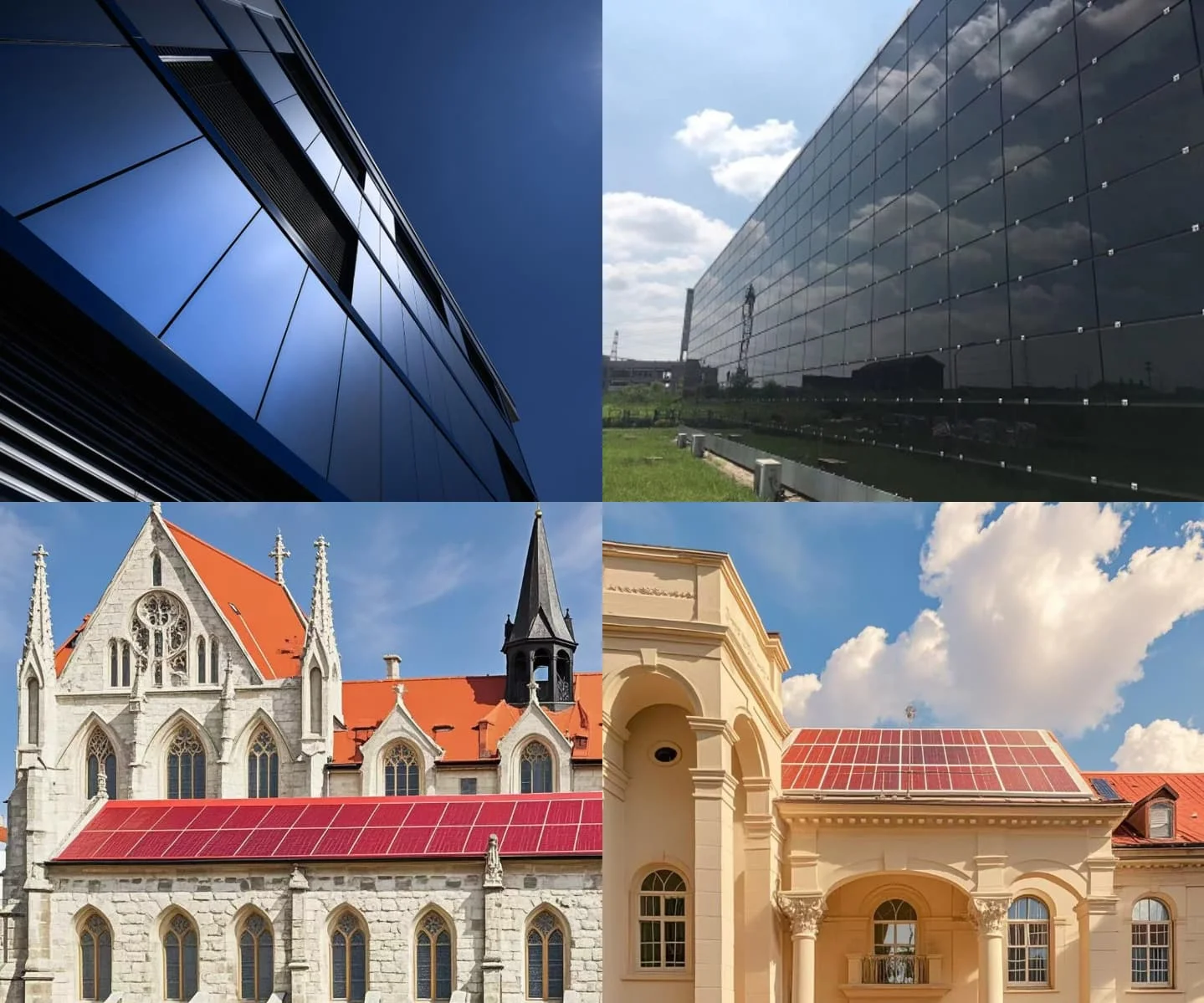
1. Berlin BIPV Living Lab: A Research-Driven Facade System
One of the most well-documented BIPV facade system case studies is the “Living Lab” building developed by Helmholtz-Zentrum Berlin.
Project Overview
-
Location: Berlin, Germany
-
System Type: Ventilated curtain wall BIPV facade
-
Technology: CIGS thin-film modules
-
Installation: 360 modules across south, west, and north facades
This project serves as both a functional building and a research platform, equipped with over 100 sensors to monitor system performance in real time.
Key Achievements
-
Demonstrated that BIPV facade systems can function effectively in real urban conditions
-
Enabled detailed analysis of shading, ventilation, and thermal behavior
-
Showed that architectural integration can be achieved without compromising aesthetics
The study confirmed that BIPV systems, despite slightly lower yields compared to rooftop PV, offer significant advantages in urban environments where roof space is limited
Key Takeaways
-
Ventilation behind facade modules improves efficiency
-
Multi-orientation facades (south + west + north) provide balanced energy output
-
Monitoring systems are critical for performance optimization
2. Spain Retrofit Project: Transforming Existing Buildings with BIPV Facades
Another important case study highlights how BIPV facade systems can be used in building retrofits, not just new construction.
Project Overview
-
Location: Spain
-
Application: Retrofitting an existing building
-
System Type: Ventilated photovoltaic facade
This project replaced conventional facade materials with PV modules, turning an aging building into a modern energy-efficient structure.
Key Achievements
-
Reduced building energy consumption
-
Improved facade aesthetics and modernized appearance
-
Demonstrated cost competitiveness with traditional facade upgrades
The study showed that integrating PV modules into building envelopes can simultaneously reduce energy demand and replace conventional materials, improving overall efficiency
Key Takeaways
-
BIPV is highly suitable for renovation projects
-
Dual functionality (cladding + energy generation) improves ROI
-
Retrofit applications can accelerate large-scale adoption
3. Bifacial BIPV Facade in France: Maximizing Energy Yield
An innovative project in France explored the use of bifacial photovoltaic modules in a BIPV facade system.
Project Overview
-
Location: Le Bourget-du-Lac, France
-
Technology: Bifacial PV modules
-
Design: Ventilated facade with reflective backing
Key Achievements
-
Achieved energy production across both warm and cold seasons
-
Reduced heating and cooling energy consumption by up to 92%
-
Utilized reflected light to increase total output
This case demonstrated that advanced technologies like bifacial modules can significantly enhance BIPV facade system efficiency, especially when combined with reflective materials
Key Takeaways
-
Reflective surfaces (albedo effect) improve performance
-
Bifacial modules are highly effective in facade applications
-
Thermal integration can reduce building energy loads
4. Melbourne Solar Facade Tower: Net-Positive Energy Design
A standout commercial example comes from Melbourne, Australia, where a modern office building incorporates a full BIPV facade system.
Project Overview
-
Location: Melbourne, Australia
-
Building Type: Office tower
-
System: Thin-film solar facade covering entire building
Key Achievements
-
Designed to generate more energy than it consumes
-
Integrated nearly 2,000 thin-film solar panels into the facade
-
Maintained a sleek glass facade aesthetic
This project illustrates how BIPV facade systems can scale to large commercial buildings and even support net-positive energy performance
Key Takeaways
-
Thin-film PV enables seamless architectural integration
-
Large-scale facades can significantly contribute to building energy supply
-
BIPV is viable for high-rise commercial applications
5. India Railway Hospital Project: Public Infrastructure Adoption
BIPV technology is also expanding into public infrastructure, as seen in a railway hospital project in India.
Project Overview
-
Location: Tundla, India
-
Application: Hospital building
-
Goal: Reduce energy costs and carbon emissions
Key Achievements
-
Integrated solar panels directly into building structure
-
Reduced dependence on external electricity supply
-
Supported national sustainability goals
The project demonstrates how BIPV facade systems can be applied beyond commercial buildings, contributing to public sector sustainability initiatives
Key Takeaways
-
BIPV is suitable for government and public buildings
-
Helps reduce operational costs over time
-
Supports large-scale renewable energy adoption
6. Key Lessons from Successful BIPV Facade System Projects
Analyzing these case studies reveals several consistent success factors:
6.1 Integration from Early Design Stage
Projects that incorporate BIPV from the beginning achieve:
-
Better aesthetics
-
Higher efficiency
-
Lower integration costs
6.2 Ventilated Facade Design
Ventilation improves:
-
Thermal performance
-
Electrical efficiency
-
System lifespan
6.3 Technology Selection Matters
-
Thin-film: better for design flexibility
-
Crystalline silicon: higher efficiency
-
Bifacial: enhanced output in reflective environments
6.4 Location and Orientation Optimization
Successful projects carefully consider:
-
Solar exposure
-
Urban shading
-
Building geometry
6.5 Dual Functionality Improves ROI
BIPV replaces:
-
Cladding materials
-
External facade systems
This reduces overall construction costs while adding energy generation.
7. Challenges Observed in Real Projects
Even successful projects highlight ongoing challenges:
-
Lower efficiency compared to rooftop PV
-
Complex installation and design coordination
-
Higher upfront costs
-
Regulatory and certification barriers
However, these challenges are increasingly being addressed through improved materials, design tools, and standardized systems.
8. Future Outlook: Scaling BIPV Facade Systems Globally
Case studies show that BIPV facade systems are no longer experimental—they are commercially viable solutions.
Future trends include:
-
Integration with smart building systems
-
Use of AI for performance optimization
-
Expansion into retrofits and public infrastructure
-
Development of transparent and colored PV materials
Global research also indicates that facade-integrated photovoltaics could provide a significant portion of urban energy demand, especially in dense cities where roof space is limited.
Conclusion
The success of BIPV facade system projects around the world demonstrates the technology’s potential to transform modern buildings into self-sustaining energy systems.
From research facilities in Berlin to commercial towers in Melbourne and public infrastructure in India, these case studies highlight that:
-
BIPV facades are technically feasible
-
They deliver real energy savings
-
They enhance architectural design
-
They support global sustainability goals
As technology continues to evolve, the BIPV facade system will play an increasingly important role in shaping the future of smart cities and green architecture.
http://www.fgnexsolar.com
fgnexsolar -
-
AuthorPosts

- You must be logged in to reply to this topic.


