
- This topic is empty.
-
AuthorPosts
-
2026-11-12 at 9:39 am #10049
Equipment makers increasingly want 5G connectivity built into their products rather than bolted on beside them. Kiosks, charging stations, vending and ticketing machines, digital signage, robots, inspection vehicles and industrial controllers all benefit from a connection that is part of the product, managed with it and certified with it. When that connection must also survive the loss of one mobile network, dual SIM 5G becomes part of the design brief.
Working with a dual SIM 5G router ODM manufacturer makes this possible without building a cellular team from scratch. But a router board placed inside someone else’s enclosure behaves differently from a router on a desk. This checklist covers the engineering questions that decide whether the integration succeeds, grouped by discipline, so that each member of the product team knows what to ask.
Mechanical Questions
Board outline and mounting points. Confirm the board dimensions, mounting hole positions, and clearance needed above and below components, and compare them with the space available in the product.
Connector positions. Ethernet, power, serial, SIM, and antenna connectors must be reachable once the board is installed. Moving one connector on a custom design is far cheaper than redesigning the product’s enclosure.
SIM access. Decide whether SIMs will be inserted once at the factory, by an installer on site, or replaced during service. That decision drives slot position, covers, and tamper resistance. Where SIM slots are reachable by users, electrostatic discharge protection at the slot matters.
Vibration and shock. Products that move, such as vehicles and robots, need secure mounting, retained connectors, and strain relief on antenna cables.
Thermal Questions
5G modules generate more heat than typical LTE modules, especially during sustained high-throughput transfers, and many reduce performance when they get too hot. Inside a sealed product, with other electronics and perhaps direct sun on the housing, the board can run much hotter than the room around it. Ask for the board’s operating temperature range and thermal guidance, plan a heat path from the module to the enclosure, and test under the worst combination of ambient temperature, solar load, and data traffic.
Antenna and RF Questions
How many antennas? Full 5G designs commonly use several cellular antennas for MIMO, plus GNSS and Wi-Fi antennas where those functions are used. RedCap devices use fewer receive antennas by design, which simplifies integration in compact products.
Where they go. Metal housings block radio signals. Antennas must be mounted outside the metal, behind a radio-transparent window, or on an external mast or roof.
Spacing and cable loss. Antennas placed too close together interfere with each other and reduce MIMO performance, and long thin cables lose signal. Keep cellular antennas separated, and keep cable runs short.
Interference from the product. Motors, switching power supplies, and displays can generate noise in the cellular bands. Early RF measurements inside the real product reveal problems while they are still cheap to fix.
Power Questions
Confirm the board’s input voltage range and how it behaves during dips and surges from the product’s own supply. In vehicles, consider transients and ignition behaviour. Decide whether the board will be powered from the product, through PoE, or will itself power other devices through PoE Out, and size the product’s supply for the peak demand of the cellular module, not its average.
Software and Interface Questions
Which interfaces the product needs. Ethernet to the main controller, serial to legacy subsystems, digital I/O for status signals, USB for local service access.
How the product’s controller talks to the router. Through standard IP networking, management protocols such as SNMP, or an agreed interface for status and configuration.
Default behaviour. Failover rules between SIMs, APNs, VPN settings, and the management server should be part of the firmware delivered with the board.
Updates. Agree how router firmware will be updated in the field, and how updates will be coordinated with the product’s own software releases.
Dual SIM Behaviour
Most single-module dual SIM designs keep one SIM active at a time and switch to the other when the primary link fails. That is effective against an operator outage, but the switchover takes some seconds. Products that cannot tolerate any gap need two cellular modules, which adds cost, power, heat, and antennas. Decide which behaviour the product really needs before the board is chosen.
Compliance Questions
Integrating a certified board does not automatically certify the finished product. The product as placed on the market usually needs its own assessment for radio, electromagnetic compatibility and safety, and in the European Union, cybersecurity requirements for internet-connected radio equipment have applied since 1 August 2025. Ask the ODM manufacturer which certificates and test reports exist for the board and how they can support your own certification. Some operators also require approval before devices are used on their networks.
Lifecycle Questions
Ask how long the board will be supplied, how cellular module changes will be handled and announced, and how firmware will be maintained over the product’s life. A product sold for seven years needs a connectivity board supported for at least as long.
Discipline
Key question
Why it matters
Mechanical
Do connectors and SIM slots fit our enclosure?
Avoids late enclosure redesign
Thermal
What happens at our worst-case internal temperature?
Prevents throttling and early failure
RF
Where do the antennas go, and how many?
Determines real-world coverage
Power
Can our supply handle the module’s peak demand?
Prevents resets during transmission
Software
Which defaults ship on the board?
Reduces configuration in production and on site
Compliance
Which reports support our certification?
Shortens approval time
Lifecycle
How long will the board be supported?
Protects the product’s service life
E-Lins Boards and ODM Scope
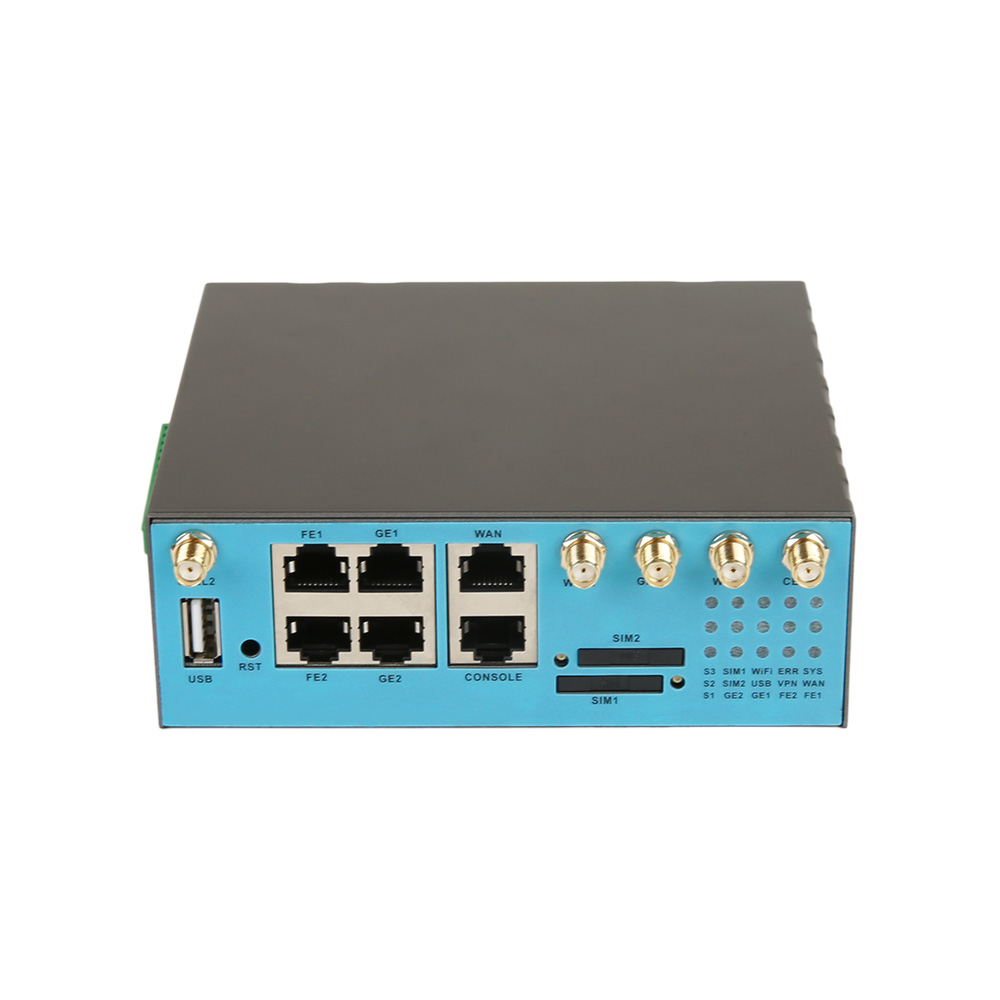
E-Lins offers embedded router boards designed for integration into customers’ equipment, intended to shorten development cycles. The H900f-B is a 5G board with dual SIM, five Gigabit Ethernet ports, USB and console access, and PoE In and Out. The H685f-B is a compact 5G board with two Gigabit ports, a serial port, PoE In, and MQTT. For 4G vehicle applications, the H720-B combines dual 4G modules with dual SIM, five Fast Ethernet ports, two serial ports, and Wi-Fi 5. Where a standard board does not fit, E-Lins ODM work can involve hardware structure, interface layout, firmware behaviour, and enclosure design; its customised H685c core motherboard is an example of a board shaped to a customer’s needs.
Every E-Lins design draws on the same industrial baseline: components rated from -35°C to +75°C, 15KV ESD protection, 1.5KV electromagnetic isolation, hardware watchdog timers, link self-healing, and firmware developed in-house with lifetime free upgrades.
The Manufacturer
Shenzhen E-Lins Technology Co., Ltd. has more than 20 years of experience in wireless data communication, including ODM and OEM manufacturing for global brands, and produces in its own SMT factory and assembly lines in Shenzhen. For equipment makers working with a dual SIM 5G router ODM manufacturer, answering these questions early is what turns a connectivity board into a dependable part of the product.
https://e-lins.com/
Shenzhen E-Lins Technology Co., Ltd. -
AuthorPosts

- You must be logged in to reply to this topic.


