
- This topic is empty.
-
AuthorPosts
-
2026-11-25 at 10:00 am #10185
Green buildings aim to cut emissions every day, and their backup power can follow the same principle. Battery storage keeps critical loads running through a grid interruption silently and with no on-site emissions, and on normal days the same battery stores rooftop solar and trims peaks. MPMC, a Shanghai-based manufacturer of battery energy storage systems, recommends its HBD-E all-in-one systems for small and mid-size buildings and HBD-A liquid-cooled storage for large buildings and campuses.
Planning the Backup Reserve
Which Loads to Protect
Backup planning starts by sorting loads. Emergency lighting, security, IT and communications usually come first, followed by refrigeration, pumps and selected lifts or ventilation. The EMS keeps a reserve of stored energy for these loads and switches the building to off-grid operation when the supply is interrupted. The HBD-E’s 150% overload capability for 10 seconds covers the starting current of pumps and lift motors.
Reserve Versus Daily Cycling
Each building chooses how much capacity to hold in reserve and how much to cycle daily for solar and peak shaving. A clinic may keep a larger reserve, while an office may dedicate more capacity to afternoon peaks, and the settings can be changed remotely by app or PC over 4G, 5G or WiFi.
Table 1. Planning backup loads in a green building
Load class
Typical loads
Battery role
Life safety and security
Emergency lighting, alarms, access control
Always covered from the reserve
IT and communications
Servers, networks, building management
Covered through interruptions
Essential services
Refrigeration, pumps, selected lifts
Covered according to the reserve size
Comfort loads
General lighting, small power
Supplied by solar and storage on normal days
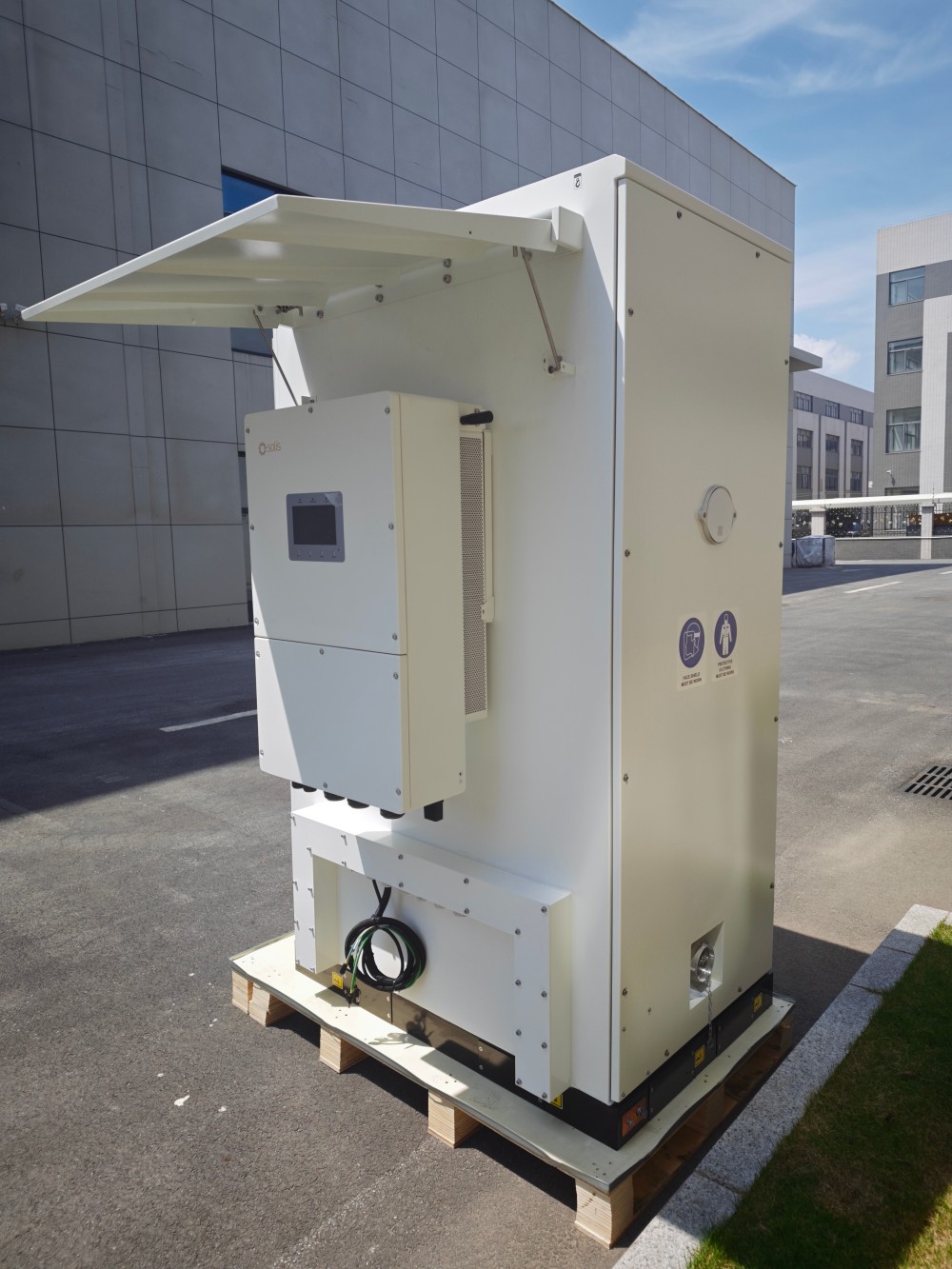
MPMC HBD-E Series HBD-50-100 all-in-one battery energy storage system installed outdoors.
Recommended Systems by Building Size
Small and Mid-Size Buildings: HBD-E
HBD-E systems combine inverter, PCS and EMS in one cabinet, from 10 kW / 30.7 kWh to 125 kW / 261.2 kWh, with direct PV input of up to 250 kWp. They are CE and CEC certified, rated IP54, handle 150% overload for 10 seconds for motor starts, and carry aerosol fire suppression and anti-electric shock protection as standard.
Large Buildings and Campuses: HBD-A
HBD-A systems from 125 kW to 1,125 kW per unit use liquid cooling and LFP 314Ah cells rated for 8,000 cycles, with on-grid/off-grid switching and seamless switching available as an option, plus black start and grid-forming functions for campus microgrids.
Table 2. Recommended MPMC storage for green building backup
Model
Power
Energy
Building type
HBD-E HBD-10-30
10 kW
30.7 kWh
Small offices and shops
HBD-E HBD-50-100
50 kW
100.4 kWh
Clinics and mid-size offices
HBD-E HBD-125-260
125 kW
261.2 kWh
Larger buildings with rooftop PV
HBD-A HBD-500-1000
500 kW
1,045 kWh
Large buildings and hotels
HBD-A HBD-1000-2000
1,125 kW
2,170 kWh
Campuses and building groups
Note: The table shows selected models; the HBD-E Series also includes the HBD-12-30, HBD-30-100 and HBD-40-100, and the HBD-A Series the HBD-125-260, HBD-210-410, HBD-250-1000, HBD-DC 410 and HBD-DC 5000.
Quiet and Clean on Site
Battery backup involves no combustion and no fuel storage in the building, and it runs silently, which suits occupied offices, clinics and hotels. Cycle life of 6,000 cycles on HBD-E and 8,000 cycles on HBD-A at 90% depth of discharge supports daily use alongside the backup role.
The Solar Link
Rooftop PV recharges the reserve during the day, so backup capacity is restored by clean energy. Where a building also wants extended backup for long outages, a generator set can be added as a final layer, with HBD storage taking peaks so the engine runs fewer hours. MPMC’s SCADA reports solar use, storage cycling and backup events monthly and annually, retaining ten years of data.
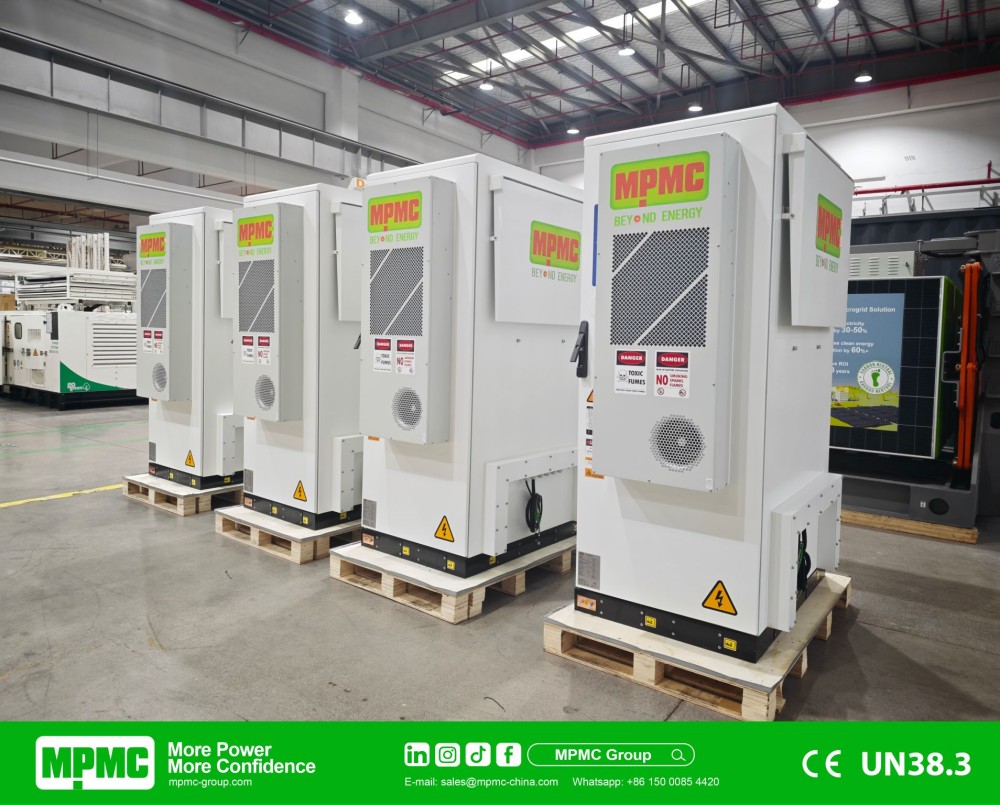
Four MPMC HBD-E Series HBD-50-100 battery energy storage systems.
Warranty and Support
HBD-E and HBD-A systems carry a 5-year product warranty and a 10-year battery performance warranty with at least 70% capacity retention at end of life, and MPMC supports projects with remote diagnostics and on-site commissioning. HBD-E units ship efficiently, with ten HBD-30-100 to HBD-50-100 units per 20-foot container. In the Netherlands, MPMC storage already provides grid-connected peak shaving for commercial users.
Planning Green Building Backup With MPMC
• List critical loads and the backup time each needs
• Decide the reserve share and daily cycling strategy
• Size PV input and storage together
• Consider a generator set for extended outages
• Contact MPMC at sales@mpmc-china.com or WhatsApp +86 150 0085 4420 for a green building storage proposal
https://www.mpmc-group.com/
MPMC Powertech Corp. -
AuthorPosts

- You must be logged in to reply to this topic.


