
- This topic is empty.
-
AuthorPosts
-
2026-11-19 at 4:52 pm #10113
Published: November 2026 | By Ipowerfiber Engineering Team
A 20D UHMWPE yarn is stronger per gram than a 1600D yarn — not because of a better polymer, but because of geometry. UHMWPE yarn tenacity decreases as denier increases, and the drop is large enough to change price negotiations: the same nominal grade can carry 20% less usable strength in one denier than in another. This guide gives the uhmwpe yarn tenacity cN/dtex by denier specification table Ipowerfiber works to for its 50D–400D labour protection series, explains the physics in plain language, and shows purchasing teams how to convert both numbers into one figure — cost per unit of strength — before comparing quotes from any China manufacturer.
1. UHMWPE yarn tenacity decreases as denier increases — by how much?
Fine denier is not a styling choice; it is where the strength lives. Industry parameter tables put the qualified floor roughly like this, with "excellent" one to two points above:
• 20D: qualified ≥36 cN/dtex
• 50D: qualified ≥34
• 100D: qualified ≥32
• 200D: qualified ≥30
• 400D: qualified ≥28
• 800D: ≈26–28, producer dependentTwo lots can both say "high tenacity" and still differ by 8 cN/dtex — a 200D at 30 and a 400D at 28 are not the same product, and neither is a 200D delivered at 28. When your uhmwpe yarn tenacity cN/dtex by denier specification table is on the desk, the conversation moves from price per kilogram to strength per kilogram, which is the number the knitting floor actually consumes.
How to read a uhmwpe yarn tenacity cN/dtex by denier specification table
Read it vertically, not horizontally. Pick your denier first — the one your gauge and target ANSI level need — then compare lots inside that column only. A 400D lot at 30 cN/dtex does not rescue an 18-gauge programme that needs 200D at 30; the denier is fixed by the machine, and the tenacity is what you negotiate.
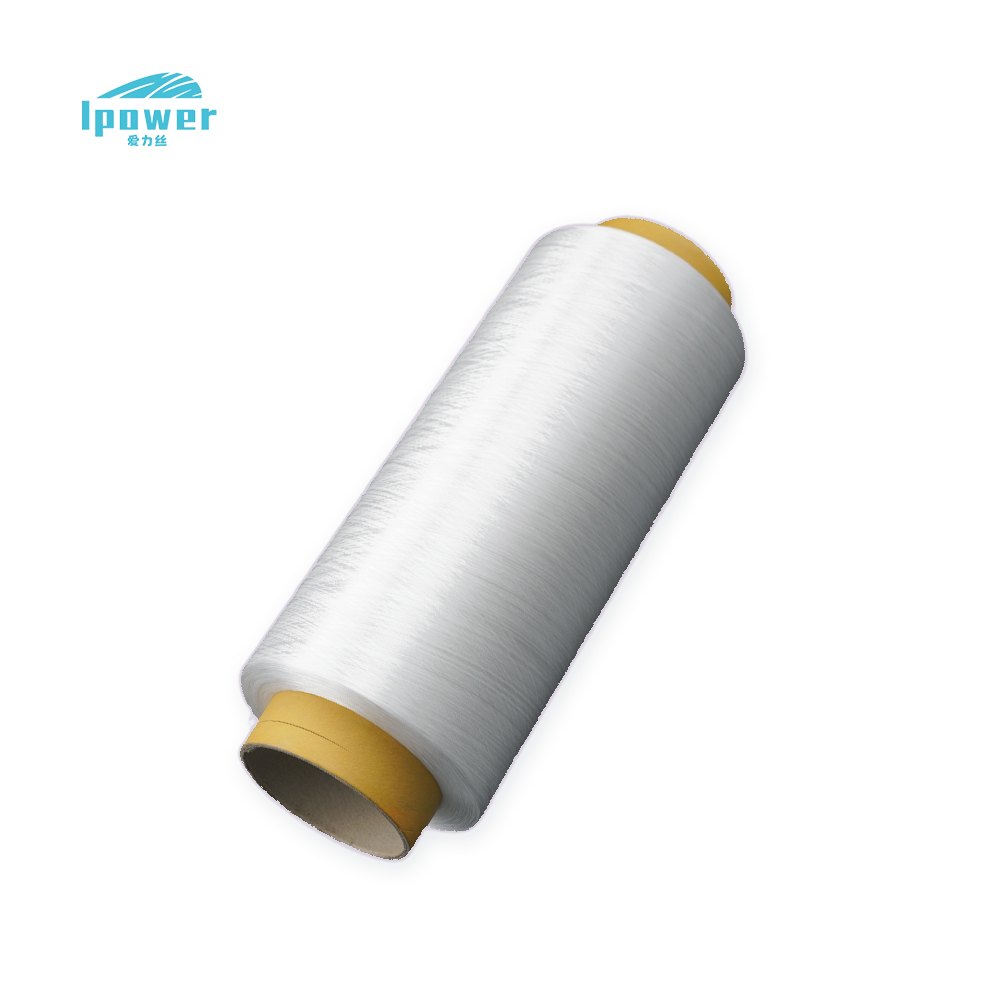
2. Why does the strength fall as the yarn gets coarser?
Gel-spun UHMWPE gains strength in the drawing step, and thicker filaments draw less perfectly. After gel spinning, the filament is drawn at high ratio to align molecular chains along its axis. A fine filament — a 20D yarn may carry dozens of filaments under one denier each — presents a short, even path, so the draw ratio stays uniform and the chain orientation approaches the theoretical limit. A coarse filament has a thicker cross-section: the outer skin orients while the core lags, orientation spread widens, and specific strength — measured per dtex, not per filament — falls.
This is why the highest tenacity uhmwpe yarn grade for fine denier sits at the top of every producer's range, and why no mill promises 36 cN/dtex at 800D. It also explains the price curve: fine denier costs more per kilogram because the yield of top-grade output is lower — the premium buys physics, not marketing. For buyers comparing custom 50D–400D programmes, the honest question to a supplier is not "what is your best tenacity" but "what is your tenacity at my denier, lot by lot".
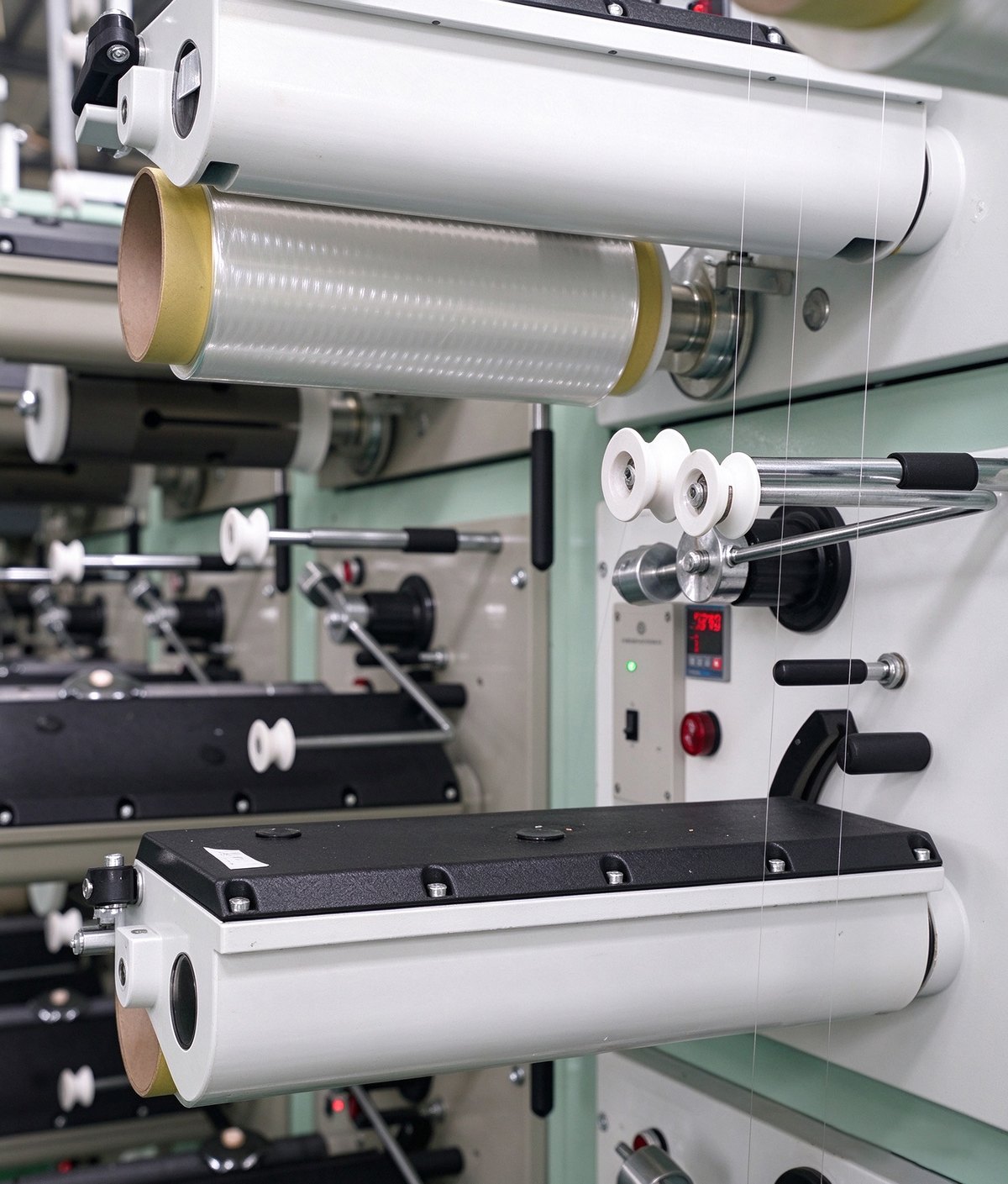
3. Using the inverse law in price talks
Convert both quotes to cost per unit of strength. Divide price per kilogram by the guaranteed tenacity. A lot at $24/kg with 30 cN/dtex costs $0.80 per strength unit; a lot at $22/kg with 28 costs $0.79 — nearly identical once the knitting floor's reality is priced in. Now flip it: a "cheaper" lot at $22 with a tenacity 6% below spec costs more per usable unit, and the shortfall shows up as a lower finished-glove grade or a heavier liner.
Work one through. A buyer holds two quotes for 200D: Lot A at $25/kg certified 30 cN/dtex, Lot B at $23.50/kg certified 29. Lot A costs $0.833 per strength unit, Lot B $0.810 — on paper Lot B wins by 3%. But the programme's knit was tuned on 30; at 29 the same liner carries roughly 3% less fibre strength, and if the pilot showed it sitting 4% above the A4 boundary, that margin is gone. The correct move is not picking a winner — it is asking the supplier to hold 30 at $23.50, which a China factory running its own drawing line can often do for a custom OEM volume. Wholesale buyers who negotiate tenacity and price together get both; buyers who negotiate price alone get price.
Three lines to ask for in any wholesale UHMWPE yarn quote: guaranteed tenacity range at your denier (not a datasheet from another grade), a batch certificate with each lot, and the right to reject on incoming test. Jiangsu Ipowerfiber Tech Co., Ltd. quotes its 50D–400D labour protection fibre exactly this way — denier-matched tenacity floors, batch certificates on every cone, factory direct from 100 kg trial lots for OEM glove programmes — see the 50D–400D labour protection series and the full UHMWPE fibre range.
✅ Bottom line: Tenacity is a function of denier, not a datasheet constant. Compare lots at your denier, price them per strength unit, and the "cheap" quote often turns out to be the expensive one.
Frequently asked questions
Q: Is the rule that uhmwpe yarn tenacity decreases as denier increases true for every producer?
A: The direction is universal — it follows from gel-spinning physics. The exact floor values differ by mill and resin, which is why the spec table should come from your actual supplier at your denier, not from a generic grade chart.
Q: What is the highest tenacity uhmwpe yarn grade for fine denier available today?
A: Sub-50D yarns reaching 38–40 cN/dtex are the top of the industrial range; 36+ at 20D is a realistic qualified floor. Above 400D the ceiling drops toward 28–30. Ask for the excellent-band figure, then put it in the contract. That is what the highest tenacity uhmwpe yarn grade for fine denier means in practice — the top of a mill's sub-50D range, not its catalogue maximum.
Q: Does higher tenacity yarn cost more per kilogram?
A: Per kilogram, yes — fine denier carries a premium because top-grade yield is lower. Per unit of strength it can be cheaper, which is exactly the comparison the cost-per-strength method above is for.
Next step
Send your denier, target ANSI or EN 388 level and annual volume to Ipowerfiber. You will get a denier-matched tenacity floor, a sample cone with its batch certificate, and a unit-strength cost comparison you can take straight into your next price review.
http://www.ipowerfiber.cn
Jiangsu Ipowerfiber Tech Co., Ltd. -
AuthorPosts

- You must be logged in to reply to this topic.


