
- This topic is empty.
-
AuthorPosts
-
2026-07-22 at 10:09 am #9024
For decades, productivity in apparel manufacturing was measured by one number: sewing speed. A machine capable of running at higher RPM was often considered the better investment because higher speed appeared to promise higher output. While speed still plays an important role in factory efficiency, today's garment manufacturers are discovering that it is no longer the deciding factor.
Modern apparel production has changed dramatically. Stretch fabrics, lightweight technical textiles, recycled materials, and increasingly complex garment structures have introduced new challenges that cannot be solved simply by increasing machine speed. Instead, manufacturers are paying closer attention to how fabrics move through the sewing process.
The quality of a finished garment depends not only on stitches but also on fabric feeding. When materials are fed consistently and remain stable throughout sewing, factories experience fewer defects, lower rework rates, and more predictable production. This is why the fabric feeding system has become one of the most important technologies in modern industrial sewing.
Modern Fabrics Demand Better Control
Today's apparel industry produces far more than basic woven garments. Sportswear, outdoor clothing, yoga apparel, workwear, uniforms, fashion knitwear, and functional textiles all rely on materials with unique mechanical properties.
Many fabrics now feature:
-
High elasticity
-
Lightweight construction
-
Moisture-management finishes
-
Laminated layers
-
Four-way stretch
-
Recycled synthetic fibers
These materials behave differently under sewing conditions. Some stretch before the stitch is formed, while others compress easily or shift between layers. Even slight inconsistencies during feeding can create visible defects once the garment relaxes after sewing.
Factories that process these materials every day understand that maintaining stable fabric movement is becoming more difficult than increasing sewing speed.
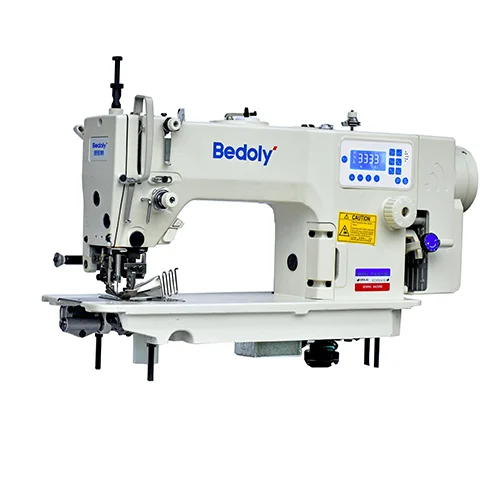
Why Sewing Speed Is No Longer the Main Performance Indicator
Running a sewing machine faster does not automatically improve factory productivity.
Imagine two production lines. One operates at maximum speed but produces frequent seam distortion, requiring operators to stop for adjustments and quality inspectors to reject finished garments. The second line runs slightly slower but delivers stable seams and consistent quality throughout the shift.
The second factory usually achieves higher overall efficiency.
Production managers increasingly evaluate performance using indicators such as:
-
First-pass quality
-
Rework percentage
-
Material waste
-
Operator efficiency
-
Production consistency
-
Equipment utilization
Each of these metrics is directly influenced by fabric handling rather than maximum machine speed.
As labor costs continue to rise, manufacturers recognize that reducing defects often generates greater savings than increasing production speed.
The Hidden Cost of Poor Fabric Feeding
Fabric feeding problems rarely appear as dramatic machine failures. Instead, they develop gradually during production and often remain unnoticed until garments reach final inspection.
Typical problems include:
-
Seam puckering
-
Wavy hems
-
Twisted side seams
-
Uneven sleeve attachment
-
Distorted collars
-
Panel misalignment
-
Inconsistent stitch appearance
Although each defect may seem minor, the combined impact can be significant across thousands of garments.
Poor feeding also creates indirect costs that are easy to overlook:
-
Additional operator adjustments
-
Lower production rhythm
-
Increased inspection time
-
Higher material consumption
-
More customer complaints
For manufacturers working with premium apparel brands, consistent seam quality is no longer optional. It directly affects customer satisfaction and brand reputation.
Why Fabric Feeding Systems Are Receiving More Attention
Every stitch begins with controlled fabric movement.
If fabric enters the sewing area unevenly, no amount of thread adjustment can completely compensate for the resulting distortion.
Modern fabric feeding systems are designed to stabilize material movement throughout the sewing process. Rather than relying entirely on operator experience, advanced feeding mechanisms help maintain consistent alignment between fabric layers, reducing unnecessary stretching or compression.
This becomes especially valuable when producing garments with multiple panels, curved seams, or mixed fabric constructions.
Factories investing in feeding technology often report improvements in several areas simultaneously:
-
Cleaner seam appearance
-
Reduced operator intervention
-
Better production repeatability
-
Improved quality consistency
-
Lower training requirements for new operators
Instead of chasing higher sewing speeds, many manufacturers now focus on making every stitch more reliable.
Automation Is Changing Production Priorities
The apparel industry is facing increasing pressure from rising labor costs, shorter delivery schedules, and higher customer expectations.
As a result, manufacturers are investing in industrial sewing automation rather than relying solely on manual improvements.
Automation is not simply about replacing operators. It is about making production more predictable.
Features such as programmable sewing parameters, automatic thread trimming, digital speed control, and intelligent feeding systems help reduce variation between different operators and production lines.
More importantly, automation allows factories to maintain stable quality while handling increasingly complex fabrics.
This shift is particularly noticeable among manufacturers producing sportswear, technical apparel, outdoor garments, and other products where fabric behavior is difficult to control manually.
Better Feeding Supports Sustainable Manufacturing
Sustainability has become another important consideration in garment production.
Reducing waste is no longer only an environmental objective—it is also a business advantage.
Every defective garment consumes additional fabric, thread, labor, and energy before eventually being repaired or discarded.
By improving feeding stability and reducing sewing defects, manufacturers naturally lower production waste without changing materials or increasing equipment complexity.
Better fabric control also supports the growing use of recycled fabrics, which often behave differently from traditional textiles and require more precise handling during sewing.
As sustainability standards continue to rise across global supply chains, production consistency becomes increasingly valuable.
Choosing Equipment That Supports Long-Term Production
When evaluating new industrial sewing equipment, manufacturers often compare motor power, maximum speed, or automation features.
While these specifications remain important, they should not be the only criteria.
Factories should also consider:
-
The range of fabrics being processed
-
Garment complexity
-
Production volume
-
Operator experience
-
Maintenance requirements
-
Feeding technology
-
Long-term process stability
Machines that maintain consistent fabric control typically deliver greater long-term value than machines designed primarily for higher operating speeds.
The objective is not simply producing more garments every hour but producing more garments that pass inspection the first time.
Looking Beyond Machine Specifications
Successful apparel manufacturers rarely view sewing equipment as isolated machines.
Instead, they evaluate how each piece of equipment contributes to the entire production process.
Stable feeding improves quality.
Higher quality reduces rework.
Lower rework increases efficiency.
Greater efficiency improves delivery performance.
Ultimately, the competitive advantage comes not from one individual feature but from a production system where every operation works together consistently.
This explains why many factories are paying greater attention to feeding technologies when planning equipment upgrades.
Final Thoughts
The future of apparel manufacturing will not be defined by sewing speed alone. As fabrics become lighter, more elastic, and increasingly technical, maintaining consistent fabric movement has become one of the most important challenges on the production floor.
Manufacturers that invest in better fabric feeding systems, modern industrial sewing automation, and reliable industrial sewing equipment are building production lines that deliver consistent quality rather than simply higher output.
For companies seeking long-term competitiveness, improving the way fabric moves through the sewing process may prove far more valuable than adding another few hundred stitches per minute. Better fabric control creates better garments, more efficient factories, and stronger relationships with customers who increasingly expect both quality and consistency.
http://www.bedoly.net
bedoly -
-
AuthorPosts

- You must be logged in to reply to this topic.


