
- This topic is empty.
-
AuthorPosts
-
2026-11-27 at 4:54 pm #10257
A reliable 4m x 4m Folding Gazebo Manufacturer must deliver more than a portable shelter with a 16-square-meter footprint. For distributors, rental operators, event organizers, and outdoor equipment brands, the real requirements involve structural stability, deployment efficiency, fabric performance, transport convenience, and consistent manufacturing quality. A 4m x 4m folding gazebo is frequently used at outdoor exhibitions, trade shows, markets, sporting events, promotional activities, and temporary commercial installations. These applications expose the product to repeated assembly, changing weather conditions, and frequent transportation, making structural design and manufacturing consistency essential selection criteria.
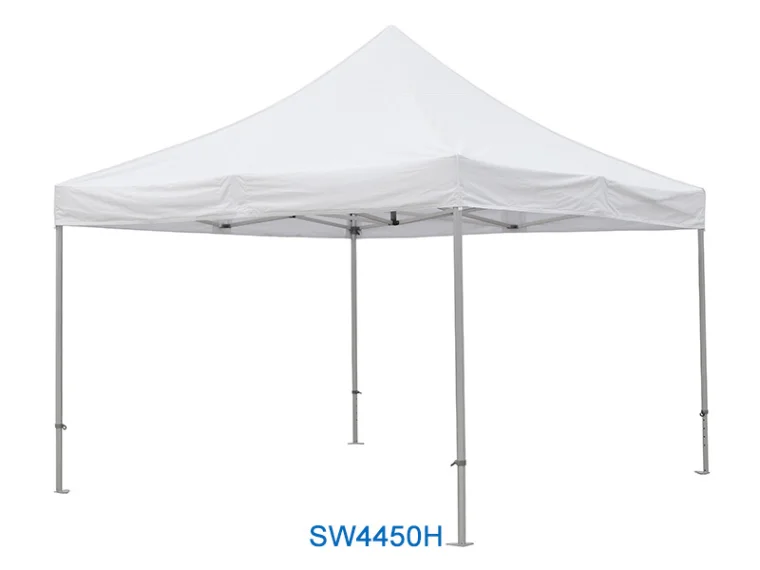
The 4m x 4m configuration offers a practical balance between usable coverage and portability. However, products with identical external dimensions can differ considerably in frame construction, joint design, roof tension, fabric specifications, and operational lifespan. Understanding these differences helps businesses select products that meet actual application requirements while controlling maintenance costs and replacement frequency.
Why the 4m x 4m Folding Gazebo Configuration Matters
A 4m x 4m folding gazebo provides approximately 16 m² of covered space, making it suitable for applications that require more working or display area than conventional 3m x 3m models. It can accommodate exhibition counters, product displays, registration desks, catering equipment, or temporary customer service stations without requiring a permanently installed structure.
For commercial applications, the square footprint also simplifies site planning. Multiple units can be positioned side by side to create larger covered areas, while the symmetrical layout provides flexibility when arranging entrances, sidewalls, and internal equipment. Compared with fixed-frame shelters, a folding gazebo can be collapsed for transportation and storage, reducing the logistical burden for businesses operating across multiple venues.
Nevertheless, the larger roof area increases the importance of frame rigidity and wind-load management. A larger canopy captures more wind than a smaller shelter, potentially increasing stress on the roof supports, connecting brackets, and leg assemblies. Therefore, a 4m x 4m folding gazebo should be evaluated as an integrated structural system rather than simply a larger version of a standard pop-up tent.
Frame Construction Determines Structural Reliability
The frame is one of the most important factors when evaluating a 4m x 4m Folding Gazebo Manufacturer. Its material, tube dimensions, wall thickness, connection structure, and locking mechanisms directly influence load distribution and repeated-use performance.
Steel and aluminum are the two common materials used in folding gazebo frames. Steel generally provides higher material strength and is suitable for applications where structural rigidity and cost control are priorities. Its main considerations include total product weight, corrosion protection, and transportation requirements. Powder-coated steel tubes can improve surface protection, although coating consistency and corrosion resistance should also be assessed.
Aluminum frames offer a lighter alternative, making them attractive for event rental companies, mobile vendors, and users who frequently transport and assemble their shelters. However, aluminum grades, extrusion profiles, and wall thickness must be evaluated together. A lightweight frame is not automatically a durable frame. Insufficient material thickness or poorly designed joints can result in deformation under repeated loading.
Connection components deserve equal attention. Roof hubs, sliding brackets, crossbars, and leg connectors experience repeated mechanical movement during opening and closing. Reinforced connection points and appropriately designed locking systems help reduce looseness and premature wear. Manufacturers should also verify that the frame can be repeatedly deployed without excessive resistance, misalignment, or difficulty engaging the locking mechanism.
Roof Fabric Performance and Weather Protection
The roof canopy directly affects the usability of a 4m x 4m folding gazebo in outdoor environments. Fabric selection should consider water resistance, UV exposure, tensile strength, tear resistance, and color durability.
Polyester is widely used because of its relatively low weight, flexibility, and suitability for protective coatings. Depending on the application, manufacturers may offer different fabric weights and coating treatments. For example, PU or PVC coatings can improve water resistance, while UV-resistant treatments help reduce material degradation during prolonged outdoor exposure.
Fabric weight, commonly expressed in GSM, is an important specification, but it should not be treated as the only indicator of quality. Two fabrics with the same GSM may have different yarn construction, coating thickness, tear strength, and waterproof performance. Buyers should request measurable specifications, including hydrostatic pressure ratings where relevant, UV protection data, and seam construction details.
The roof design must also maintain appropriate tension across the 4m x 4m span. Poorly fitted fabric can create water-collecting depressions, particularly during rainfall. Reinforced corners, suitable roof geometry, and secure attachment points help maintain canopy positioning. For applications involving regular outdoor exposure, drainage design and clear operating instructions are particularly important.
It is equally important to distinguish between water-resistant fabric and a fully weatherproof shelter. Folding gazebos are generally temporary structures, and their safe operating conditions depend on wind exposure, anchoring, drainage, and local weather. They should not be positioned as permanent shelters or used during severe weather beyond their tested operating limits.
Folding Mechanism and Transportation Efficiency
The primary commercial advantage of a folding gazebo is its ability to transition quickly between storage and operation. For businesses managing multiple events, deployment time directly affects labor requirements and operational efficiency.
A well-designed folding mechanism should allow the frame to expand smoothly without requiring excessive force. Sliding joints should move consistently, while locking pins and adjustment mechanisms should engage securely. Components must also maintain sufficient clearance to prevent unnecessary friction or interference during repeated folding cycles.
Transportation dimensions are another important consideration. A 4m x 4m gazebo may provide substantial coverage when assembled, but its folded dimensions determine how efficiently it fits into delivery vehicles, storage facilities, and warehouse spaces. A compact folded frame, manageable product weight, and an appropriate carrying bag can improve handling efficiency.
Manufacturers should evaluate not only the opening and closing process but also the durability of the folding system over repeated cycles. Testing should identify potential problems such as bracket deformation, pin failure, loose fasteners, and fabric abrasion caused by contact with the frame.
Customization and Manufacturing Consistency
For distributors and private-label brands, customization is often an important part of supplier selection. A capable 4m x 4m Folding Gazebo Manufacturer should support product configurations that match different market requirements rather than offering only a fixed standard model.
Common customization options include frame materials, canopy colors, printed logos, sidewalls, carrying bags, and accessories such as ground stakes and weight bags. Full-color printing can help transform a standard folding gazebo into a branded promotional structure, particularly for exhibitions, sporting events, and outdoor marketing campaigns.
However, customization should not compromise structural or functional performance. Printed fabric must maintain appropriate colorfastness and coating performance, while additional sidewalls can increase wind exposure and require suitable anchoring arrangements. Product specifications should therefore be confirmed before mass production.
Manufacturing consistency is equally important. Differences in tube dimensions, fabric cutting, stitching positions, and connector tolerances can create noticeable variations between production batches. Integrated production processes and standardized quality checkpoints help reduce these inconsistencies.
Why Manufacturing Capacity and Quality Control Matter
A supplier's production capabilities influence its ability to fulfill repeat orders, manage customization, and maintain consistent delivery quality. Established in 2011, SUNWAY Outdoor Products operates a 12,000 m² production base with more than 80 professionals, providing manufacturing support for collapsible gazebos, foldable tables, and outdoor living products.
With annual exports accounting for approximately 80% of production and an export value exceeding USD 8 million, SUNWAY serves customers across Europe, North America, the Middle East, and Australia. This international business experience provides a foundation for understanding different market requirements and product expectations.
Quality assurance should extend throughout the manufacturing process, from raw material inspection to frame assembly, fabric sewing, and finished-product evaluation. For folding gazebos, critical inspection points include tube dimensions, weld quality where applicable, coating condition, joint movement, locking performance, canopy fitting, and accessory completeness.
SUNWAY applies multi-stage quality control procedures and conducts 100% pre-shipment inspection. This approach helps identify visible defects, assembly problems, and missing components before products leave the factory. For repeat orders and private-label programs, consistent inspection standards are particularly valuable because product uniformity directly affects the distributor's reputation and after-sales workload.
Selecting the Right 4m x 4m Folding Gazebo Manufacturer
Choosing a manufacturing partner requires evaluating the complete product system rather than comparing quotations based solely on unit price. Frame material and dimensions, fabric specifications, connection durability, folded size, customization capabilities, and quality inspection procedures should all be included in the technical evaluation.
A practical supplier assessment should also clarify the intended application, expected frequency of use, local weather conditions, transportation arrangements, and required accessories. These factors determine whether a standard steel frame, lightweight aluminum structure, upgraded canopy fabric, or additional anchoring equipment is appropriate.
For businesses seeking a long-term supply relationship, production capacity, export experience, batch consistency, and pre-shipment inspection are just as important as the initial product specification. A manufacturer capable of controlling both structural performance and production quality can help reduce operational risks throughout the product's service life.
SUNWAY Outdoor Products combines established manufacturing experience, an extensive production base, international export capabilities, and multi-stage quality management to support different folding gazebo requirements. For companies sourcing a 4m x 4m folding gazebo, working with a manufacturer that understands the relationship between product design, manufacturing precision, and real-world outdoor applications provides a stronger foundation for reliable supply.
http://www.sunwayoutdoor.com
SUNWAY Outdoor Products Co., Ltd. -
AuthorPosts

- You must be logged in to reply to this topic.


